|
Jacob of Urhoy (Urfa)
Question:
World Council Arameans/ Syriac Universal Alliance (WCA/SUA)
WCA/SUA: Grave Human Rights violators, international syndicate of hate mongers
Aramean history, history, culture and language, a six partite interview
17-3-2021: Inventive in wickedness, $1.2 million for White Helmets and destabilization of Syria.
28-5-2020: Destruction, piracy, theft and looting of the Syrian and Iraqi oil
Update December 12, 2019: Arameans of Iraq and Syria: when the blind is leading the blind and is serving as extermination tool in the hands of illuminati
12-12-2019: “Assyrian” flag, occult representation of sun-god Nimrod/Asshur antichrist
12-12-2019: Akitu: annual spring festival to worship Nimrod / Asshur antichrist and Semiramis, the whore of Babylon
12-12-2019: “Assyrianism”, a project of Freemasonic Illuminati Satanists? "Assyrian" Freemasons
4-11-2017: NATO/ Western weapons and (Aramean) blood sacrifices by ISIS/ISIL terrorists in Syria
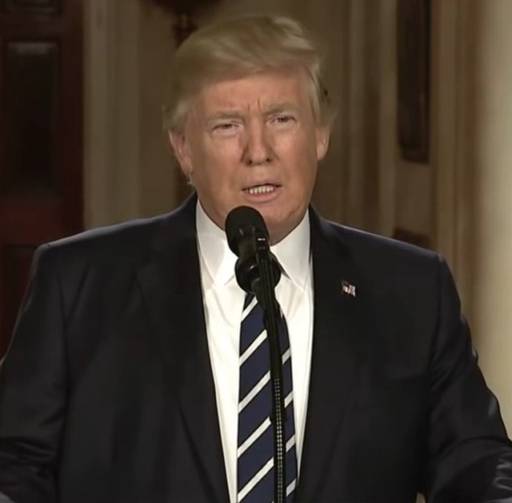
2-2-2017: Arameans of Aram-Nahrin organization sent a congratulation letter to US President Donald Trump
21-6-2016: Terroristic attack on the Arameans of Beth Zalin/ Kamishli after inauguration of Aramean Genocide monument by Patriarch Afrem Karim.
28-5-2016: Syria: Desecration of cemetery in Deir Ezzor and three Aramean martyrs in Beth Zalin
2-5-2016: After the Turks come Kurds.... Arameans, Gog and Magog......
17-2-2016: Chemical attack on Ghouta, Damascus in 2013, Arameans, Kurds and Turks..
31-12-2015: Aramean blood again flows in Syria: Terror attack on the Arameans of Kamishli
17-7-2015: Turkey, Syria and Iraq: Arameans, the downfall of an indigenous nation, Part II
30-5-2014: Turkey, Syria and Iraq: Arameans, the downfall of an indigenous nation: Part 1
7-1-2014: The two Aramean bishops: used as blackmail and bargaining instrument by odious powers……
27-6-2013: Aramean Catholic Priest Killed in Syria
23-4-2013: Two Aramean bishops kidnapped in Syria
21-1-2013: Iraq: Aramean teacher and student killed in Mosul: Repetition of Iraq in Syria
24-9-2011: “Liberation” of Iraq: Extermination of Arameans of Iraq. “Liberation” of Syria…..?????......
7-6-2011: The uproar in the Middle-East and the future of the Aramean nation
24-4-2010: Shutting down of Aramaic institute: It would be a travesty for Syria
============
12-8-2012: Saudi Arabia Sends Most Wanted Criminals to Syria, Yemeni Websites Reveal
29-11-2012: Syria Child Soldiers: Rebels Using Children In War - Human Rights Watch
24-3-2013: Jihadists, not Assad, apparently behind reported chemical attack in Syria
5-5-2013: Del Ponte "Our investigators have been in neighboring countries interviewing victims, doctors and field hospitals and, according to their report of last week which I have seen, there are strong, concrete suspicions ...."
===Videos ==
19-2-2013:
22-2-2012: Syria: the horror of Homs, a city at war
7-4-2012: Terrorist Extremists Destroyed Oldest Christian Church in Syria - USA supplied them
12-4-2012: Syrian Rebels Slaughter Christians
4-7-2012: Shocking Videos Reveal Truth Behind Syrian “Freedom Fighters”
24-7-2013:
12-9-2012: NATO Funded Syria Terrorists Torture and Behead Prisoners
21-10-2012: FSA Genocide against Minorities in Syria World must unite against FSA!!.
30-10-2012: FSA destroyed an Armenian church and burned the Holy Bible in Aleppo
15-12-2012: Lives of Minorities In Syria Under Western Backed Foreign Militant Occupation
23-12-2012: Turkish Islamist Terrorist Incites Syrians to Slaughter Syria's Religious Minorities
2-1-2013: Fatwa by Al Jazeera's Top Cleric: Pro-Gov't Syrian Civilians Are Legitimate Targets
20-3-2013: West Turns a Blind Eye that Their Terrorists in Syria Used WMDs, Against all Evidence
31-3-2013: Western-Backed FSA Use Child Soldiers in Syria
4-4-2013: New video shows Syrian rebels using US SEALs' sniper rifle
8-4-2013: “Aleppo, the Castle”: Documentary on Atrocities Committed by US-NATO Sponsored Terrorists in Syria
4-5-2013: Kosovo terror training camps re-open for Syrian rebels
15-5-2013: Shocking video: Cannibal terrorist says video from Syria is real: eat lung of soldier
15-5-2013: Video: Syrian rebel cuts out soldier's heart, eats it
2-7-2013: Sharia Law spreading amongst rebel held areas in Syria
25-8-2013: Al-Qaeda Linked Al-Nusra Front Rebels Kill Alawite Truck Drivers Execution Style in Syria
12-9-2013: Aleppo Syria: Invading Sunni Muslims establish sharia courts
6-10-2013: Syria SAA Discovers Qaboun Sharia Court Room
|
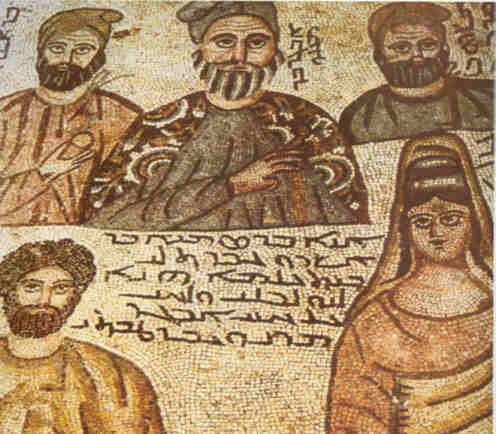
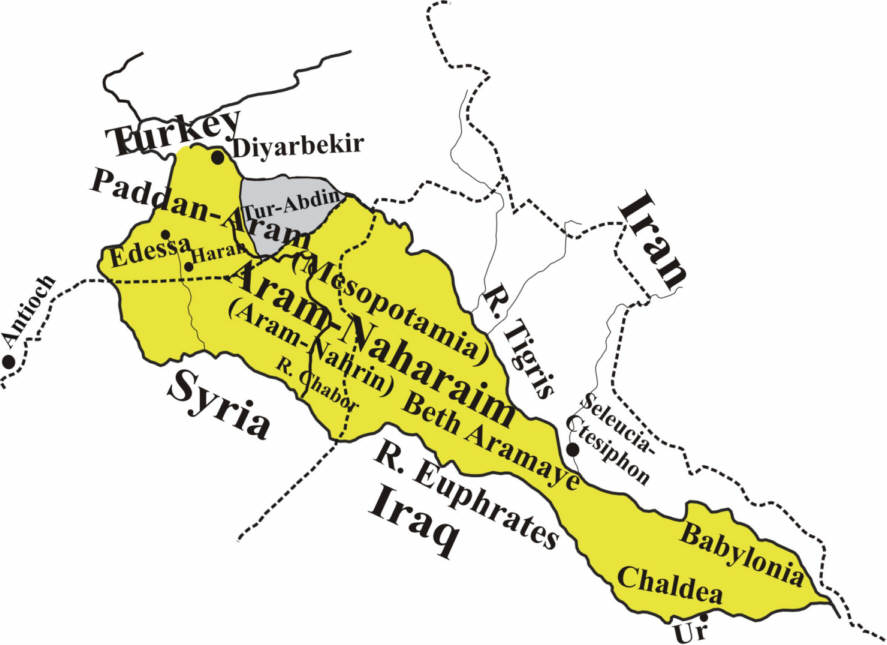
Aramean people: Aramean people (not to be confused with ‘Armenians’) speak Aramaic, the language spoken by Abraham, Moses and Jesus. They are the indigenous people of what was called in ancient times Aram- Nahrin, in our days it is called ‘Mesopotamia’. Some Arameans today identify themselves with “Assyrians”, because of the spiritual colonial hate generating activities of the Western missionaries and diplomats in the Middle-East in 16th and 19th centuries. Other Arameans became known as “Chaldeans”. However all of them are Arameans. In Turkey, the Arameans are called: Süryani. In Arabic they are called Al- Suryan.
Welcome to the website of Aramean Christians of Syria
Following Iraq, now the Aramean indigenous nation of Syria will be exterminated and forced into Diaspora by the Western colonial powers
============Arameans of Syria===============
It is estimated that there are around 2.0 million Aramean and non-Aramean Christians in Syria. Below we will provide our beloved reader with some background information on the various Aramean denominations present in Syria.
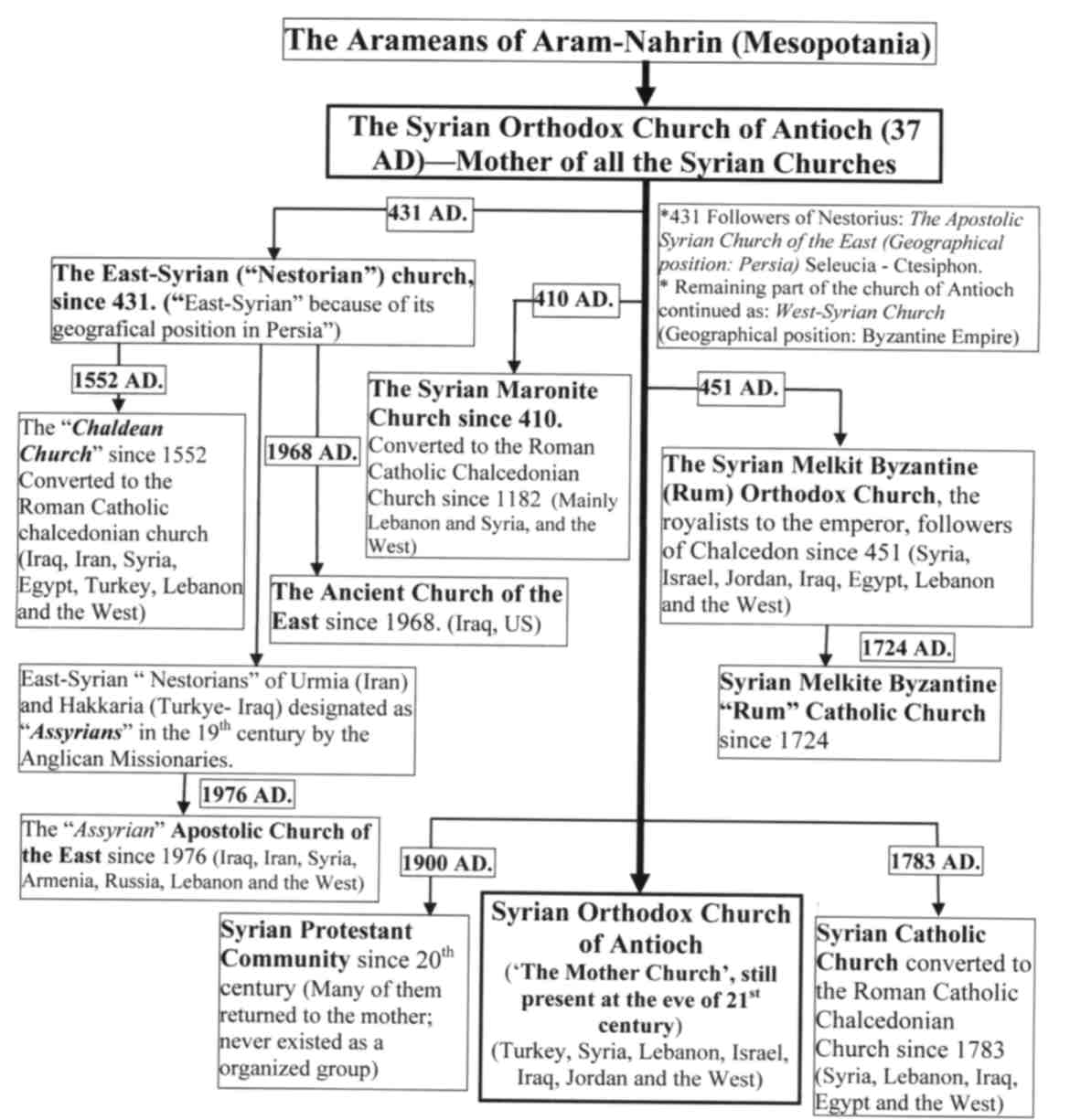
At the early beginning of Christianity, the Aramean nation was geographically termed as West- Arameans and East-Arameans. Roughly speaking, river the Euphrates was de border. The Arameans living Eastern of Euphrates, the Persian Empire, were called “East- Arameans” or “East- Syrians”; thus "Nestorians" who later became known as “Chaldeans” (1553) and again later as “Assyrians” (19th century).
The Arameans living Western of Euphrates, the Roman Empire, were called “West- Arameans” or “West- Syrians” or in short just “Syrians”. And sometimes both the East- as well as the West- Arameans are called “Syrians”; if not specifically indicated! In Syria the following Aramean denominations are present:
West- Arameans: Syrian Orthodox, Syrian Catholics, Syrian Maronites, Syrian Melkite Greek (Rum) Orthodox, Syrian Melkite Greek (Rum) Catholics East- Arameans: Chaldeans, Nestorians ("Assyrians")
Irrespective the current religious designations such as "Assyrian" or "Chaldean" , all the ancient scholars/ church fathers of these churches testify of their Aramean origin These church fathers/ scholars had access to the original sources and many of them have excelled in their wisdom and knowledge in comparison with their contemporaries and enlightened the world of their time, not only with theological knowledge but also with the regular science. The works of some of these famous scholars are still taught/ studied at renowned universities worldwide
The beginning of the Western colonial meddling and the downfall of the Aramean nation
In the 16th century, the colonial powers started to interfere with the Middle-East and in particular to create divisions within the Aramean nation and incite them against one another.
Imaginable and unimaginable methods were employed to incite the Arameans against one another on the national as well as on the religious level. To explain this, below we present to you some events as observed by the American Presbyterian Rev. Justin Perkins who visited the East- Aramean Nestorians of Urmia in 1833.
The events mentioned above are written down by a Protestant. And most probably Mr. Perkins was very well pleased to be informed about and to be witness of such events in order to discredit the other party. The Protestants however have availed themselves of such nasty methods as well and continue to do so until today.
This kind of unholy and extremely harmful technology unfortunately was employed to not only brainwash, blackmail, bribe, and persecute the East- Aramean Nestorians, but also other Aramean churches like the West- Aramean Syrian orthodox and West- Aramean Melkite Greek Orthodox church. As a result of this kind of unholy and nasty "evangelizing", the following Aramean Catholic groups were created:
In addition to that, the majority of Catholics in the Western world are deliberately being kept blind and this important information withheld from them on the unholy and nasty methods that have been employed on their behalf to divide, incite against one another and finally exterminate other nations. For this reason, this faithful Western Christian Catholics have all the rights to be informed about what has been done to other nations in their behalf and with their money.
The majority of Catholic schools, Seminars and Universities withhold deliberately students of this unsavory events taken place in the past. On the contrary, in these institutions, the "good works" of missionaries are emphasized on the fact that these "lost sheep" have come back to the "only holy Catholic Church" and that these "Unites" should be offered aid and assistance. They rather would prefer to bring back "the rest of the lost sheep" to the "only truthfully holy Catholic Church".
And the madness of all this is that this kind of blackmail, bribe, persecutions, brainwash and sorcery is placed under the umbrella of "Christianity", while in reality, it totally has nothing to do with Christian faith as explained in the Bible. And this kind of evilness is continued until our days and is the cause of the misery our people is facing in the Middle-East and has resulted in their Diaspora.
============Aramean denominations================
A message to the Aramean Orthodox and East- Arameans, that is to say:
The Syrian Orthodox Church of Antioch, The Syrian Melkite Greek orthodox Church, The Ancient Church of the East and The Assyrian Apostolic Catholic Church of the East, is this one:
From the very beginning of Christianity until today you constantly are flying at each other, whereby you have put aside Jesus Christ. You think that it is okay and nobody cares about what you are doing? And that the Lord God can't see your quarrel whereby you all have created your own private kingdoms and don't care about the real King, namely Jesus Christ? The God YAHWEH, the God of Abraham, Isaac and Jacob says, " Can any hide himself in secret places that I shall not see him? saith the Lord. Do not I fill heaven and earth? saith the Lord" (Jeremiah 23:24)
All this is okay, nothing to worry about? How can you complain that you are being persecuted, killed, your churches blown up, burned, your sons killed, your daughters and wives dishonored and assumed by strangers while you have completely put aside Christ Jesus, the Holy and Almighty God of Abraham Isaac and Jacob?
The Almighty God YAHWEH, Gloria to His Holy Name, the God of Abraham Isaac and Jacob says:
1. Behold, the Lord’s hand is not shortened, that it cannot save; neither his ear heavy, that it cannot hear: But your iniquities have separated between you and your God, and your sins have hid [his] face from you, that he will not hear (Isaiah 59:1-2)
2. Shameless nation, come to your senses 2 before you are driven away like chaff blown by the wind, before the burning anger of the LORD comes upon you, before the day when he shows his fury” (Zephaniah 2:1-2)
3. "However, if my people, who are called by my name, will humble themselves, pray, search for me, and turn from their evil ways, then I will hear their prayer from heaven, forgive their sins, and heal their country." (2 Chronicle 7:14)
It was because of our iniquities that the horrible jesus of the West was able to fragmentize us, to diffuse fake names within our nation, to destroy our heritage and faith and to cause our nation into Diaspora. No, don't blame others for this and other misfortunes. We are only and exclusively the guilty ones, and no one else. We are responsible for what is happening to us! The Lord God had blessed the Arameans of Aram-Nahrin to be the first nation to accept Christ Jesus and together with the apostles of the Lord Jesus and the converted Jews they established the Syrian Orthodox Church of Antioch. What is left of the original glorious church of Antioch? Nothing, completely destroyed because of internal quarrel and centuries old hatred and imputations.
A message to the Aramean Catholics, that is to say:
The Syrian Catholic Church, The Syrian Melkite Greek Catholic Church, The Syrian Chaldean Catholic Church, The Syrian Maronite Catholic Church , is this one:
You may call yourself whatever you want to, but please do not lose your senses. There are thousands Western Catholics who refuse to be manipulated by the Vatican. They are Catholics, but they take independent position, they read and study the Bible on daily basis and try to dedicate themselves to Jesus Christ. These are the true Christian Catholics.
You as Aramean Catholics will definitely not go to the hell if you set yourself a bit free from Vatican and take more independent position. And please stop immediately to be used as remote control. The salvation of your soul does not come from Vatican, but from Jesus Christ. The Bible says: " .........for I have espoused you to one husband, that I may present [you] [as] a chaste virgin to Christ" (2 Corinthians 11:2). Therefore, please put Jesus Christ on the first place and read the Bible in which He reveals Himself.
For those among the Aramean Catholics who want to know more about the covenant they have made, we refer to a top specialist on this field, Mr. William (Bill) Schnoebelen who has produced a DVD on this matter: http://www.youtube.com/watch?v=FuTwsQNzmQs
Appeal to all the Aramean denominations
Please have a detailed look at the decadent behavior of your children, men and women in Diaspora. No sense of shame! One would think that when a person has escaped war, bloodbaths and massacres, he would behave modest and respectable. Unfortunately, the real life is quite different than one would imagine and wish. They simply go with the decadence, immorality and enjoy thoroughly the “luxurious” life in the West.
On the broadcasting channels Ishtar, SuryoyoSat and SuroyoTv, sometimes wedding parties, new year, Christmas, eastern and other parties are broadcasted where you see some people dressed so perversely, that they look like prostitutes. They give the eyes the impression as if they have something to sell! The obnoxious behavior is that some of them wear a cross between their half-naked breasts. And the most ungodly is that these kind of people are being associated with Christianity. And that is absolutely no good advertisement, for other nations are watching us and judge us according our behavior!
The worst thing is that from child to adult they do not want to know anything about the errors and treason they committed towards the Almighty God of Abraham, Isaac and Jacob and act as if nothing is wrong. Many of them are even boasting on their good deeds, Christian faith and self-satisfaction. What is worse is that many of them have removed Christ Jesus from their lives, without being aware of it, and call themselves "Christians" for the show.
Even now they are refugee at other man’s doors, they do not have slightest reason to ask themselves: Why did we become refugee at other man’s doors and make our hands open for them? Why did not our God protect us against evil forces that have invaded and assumed our indigenous homelands? What is the cause of our Diaspora and why we lost everything? On the contrary, they enjoy the “luxurious” life in the West, act like drunkards, and do not want to be bothered with these difficult questions they simply don’t want to hear anything about!
The various Aramean Diaspora communities (including “Chaldeans”, “Assyrians”) in the West should not fool themselves and make any illusions for they have been entrapped by the “luxurious” decadent life in the West. For their survival it is necessary to wake up and reflect on what is coming. Thirty years ago nobody in Iraq would have imagined in their wildest dreams what is now happening to them, for they were entrapped in the carefree and “luxurious” life. Ten years ago nobody had imagined what is now happening with Syria. Therefore we appeal to all of the Aramean denominations as follows: "Wherefore he saith, Awake thou that sleepest, and arise from the dead, and Christ shall give thee light. 15 See then that ye walk circumspectly, not as fools, but as wise" (Ephesians 5:14-15)
For those among you who want to learn more about centuries old persecutions, the lose of our ancestral homelands, and the reasons behind Diaspora, we refer to the following articles:
http://www.aramnahrin.org/English/Turks_Kurds_Aramean_monastery_St_Gabriel_28_2_2009.htm#6
http://www.aramnahrin.org/English/Glorification_PKK_GHB_ADO_Terrorist_19_6_2010.htm
http://www.aramnahrin.org/English/Turkey_Lahore_MorGabriel_Ethnic_Cleansing_31_3_2011.htm#4
Articles concerning Aramean nation of Syria:
17-3-2021: Inventive in wickedness, $1.2 million for White Helmets and destabilization of Syria. 28-5-2020: Destruction, piracy, theft and looting of the Syrian and Iraqi oil Update December 12, 2019: Arameans of Iraq and Syria: when the blind is leading the blind and is serving as extermination tool in the hands of illuminati 12-12-2019: “Assyrian” flag, occult representation of sun-god Nimrod/Asshur antichrist 12-12-2019: Akitu: annual spring festival to worship Nimrod / Asshur antichrist and Semiramis, the whore of Babylon 12-12-2019: “Assyrianism”, a project of Freemasonic Illuminati Satanists? "Assyrian" Freemasons 4-11-2017: NATO/ Western weapons and (Aramean) blood sacrifices by ISIS/ISIL terrorists in Syria 2-2-2017: Arameans of Aram-Nahrin organization sent a congratulation letter to US President Donald Trump 2-5-2016: After the Turks come Kurds.... Arameans, Gog and Magog...... 17-2-2016: Chemical attack on Ghouta, Damascus in 2013, Arameans, Kurds and Turks.... 31-12-2015: Aramean blood again flows in Syria: Terror attack on the Arameans of Kamishli 17-7-2015: Turkey, Syria and Iraq: Arameans, the downfall of an indigenous nation, part II 30-5-2014: Turkey, Syria and Iraq: Arameans, the downfall of an indigenous nation: Part 1 7-1-2014: The two Aramean bishops: used as blackmail and bargaining instrument by odious powers…… 27-6-2013: Aramean Catholic Priest Killed in Syria 23-4-2013: Two Aramean bishops kidnapped in Syria http://www.aramnahrin.org/English/Arameans_Syria_Chemical_Weapons_Attack_15_4_2013.htm 21-1-2013: Iraq: Aramean teacher and student killed in Mosul: Repetition of Iraq in Syria 19-12-2012: Syria: Has the time arrived to carry out a false flag attack with chemical weapons to be used by the colonial powers as pretext to invade Syria?
3-12-2011:
“The use of mercenaries, death squads and snipers by Western intelligence
agencies is well documented,,
Will the ethnic cleansing of the Arameans of Iraq serve as a example to the
future ethnic cleansing of Arameans of Syria?
24-9-2011:
“Liberation” of Iraq: Extermination of Arameans of Iraq. “Liberation” of
Syria…..?????...... 24-4-2010: Shutting down of Aramaic institute: It would be a travesty for Syria
*********International media concerning Syria************
"Liberation" of Syria by the boys of colonial illuminati powers.
Death and desecration in Syria: Jihadist group 'crucifies' bodies to send message (http://edition.cnn.com)
***************The fruits of “Liberation” of Syria:************* Abductions in Syria Sectarian Tension in Syria Security chaos in Syria Local news in Syria Violations and killings in Syria
1-9-2026: Israel warned Turkey against moving south in Syria. It did so anyway 1-9-2026: Ten injured as renewed fighting erupts between Druze, HTS forces in Syria’s Sweid 31-8-2026: During August | 13 Israeli attacks against Syrian territory amid ongoing escalation 29-8-2026: Israel has made over 1,000 incursions into Syria since fall of Assad govt.: Report 28-8-2026: Hikmat al-Hijri is attempting to recast the Druze story through a Zionist lens Hikmat al-Hijri, the spiritual leader of the Druze community in Syria’s Sweida governorate, made a remarkable statement this week. The Druze, he declared, are “an inseparable part” of the state of Israel, “even in terms of faith”. Since the fall of the Assad regime in December 2024, Hijri has increasingly presented Israel as a natural political partner, then as a potential guarantor of his community’s future, and now as a spiritual and ideological aspiration for the Druze Separate educational structures, political categorisation and military integration helped to institutionalise the idea that the Druze were fundamentally different from the surrounding Palestinian Arab population Israel justified this separation by portraying the Druze as a distinct people with ancient connections to the Jewish people, linking them to the “lost tribes” of Israel, and aiming to construct a special relationship between Moses and Jethro, or Nabi Shu’ayb, the Druze prophet. This narrative has further advocated the notion of Druze loyalty to the rulers of the territory in which they live 28-8-2026: Since fall of former regime | SOHR documents 1,004 Israeli infiltrations in Syrian south 28-8-2026: Bloodshed continues in Syria | 372 victims in 241 mur*der crimes since beginning of 2026 28-8-2026: Syria's Sharaa appoints ex SDF chief as presidential advisor 27-8-2026: Why Turkey is showing restraint over Israeli strikes on Syria 26-8-2026: New agreement sees dissolution of Kurdish-led Syrian Democratic Forces 26-8-2026: Putin, Syrian President Praise Deal to Reorganize Russian Bases at Khmeimim and Tartus — Kremlin 25-8-2026: Israel launches new incursion into south Syria days after Mossad chief meets HTS diplomat 25-8-2026: Turkey won’t abandon Syria or let Israel draw ‘red lines’, Erdogan says 25-8-2026: US officially removes Syria's extremist-led government from 'sponsors of terrorism' list 25-8-2026: US Rescinds Syria's Designation as State Sponsor of Terrorism — Rubio 24-8-2026: Israeli army conducts new incursion into Syria despite Mossad chief–HTS diplomat meeting 24-8-2026: Syria Rejects Limits on Sovereignty in Talks With Israeli Delegation — Reports 24-8-2026: Syria: Former grand mufti and Assad ally receives life sentence in Syria The former top Muslim cleric under Bashar al-Assad has been sentenced to life imprisonment in Syria, a Damascus court said on Monday. 24-8-2026: Stray bullets and accidental shooting | 65 children victims of widespread of weapons in Syria At a time where streets and villages should be safe areas for children, weapons and grenades spread among civilians have turned into a source of danger threatening lives of children directly Children have become victims of the conflicts without being a part of them, where it only takes being near the shooting site or near someone holding a weapon to lose their lives 23-8-2026: Syria's HTS suspends communications with Israel after airport attack 23-8-2026: 'Conditions have been met': US prepares to remove Syria from terror list 23-8-2026: The CIA and Mossad-Created ISIL and Al-Nusra Incidents of family and tribal infighting have noticeably escalated in different areas across Syria. With weapons becoming readily available and strewn everywhere, disputes turn into clashes threatening the safety and lives of civilians and undermining civil peace. 22-8-2026: Israeli military conducts new ground incursion in Syria’s Quneitra, ransacks house 22-8-2026: 57 Israeli attacks on Syrian territory | The south in the front and strikes extend to the depth 21-8-2026: Is Israel trying to start a proxy war in Syria? 21-8-2026: SDF leader declares integration with Damascus 'complete' 21-8-2026: Israel warns Türkiye over Syria 20-8-2026: Israel issues veiled threat to Turkey following airbase strikes in Syria 20-8-2026: Israel's war minister threatens Turkey as Apache squadron moves north 20-8-2026: Israeli opinion article says Turkey's Nato protection does not apply to troops in Syria 20-8-2026: US envoy condemns Israeli strikes on Syrian airbase 19-8-2026: Israeli army chief visits southern Syria amid intensifying military aggression 19-8-2026: Turkish media warn of direct clash with Israel after strike on Syrian air base Israel’s aggression against Syria is bringing it dangerously close to Turkey’s southern border and raising the risk of a direct confrontation between Ankara and Tel Aviv, Turkish media have warned The strikes have heightened tensions between Ankara and Tel Aviv, with Turkish news outlets portraying the attack as a message aimed at preventing Ankara from establishing a stronger presence in Syria 19-8-2026: Israel confirms striking Syrian air base, claims it sought to block Turkish deployment 19-8-2026: Israeli attack on Syrian air base launched hours after Turkish delegation visited site 18-8-2026: Israel bombs Syrian military base as US praises Damascus’s ‘de-escalatory’ policy toward Tel Aviv 18-8-2026: Israeli warplanes bomb Syrian airbase hours after Turkish military visit Israeli warplanes reportedly struck a decommissioned military airport in northwestern Syria early Tuesday, just hours after a Turkish military delegation visited the site to assess the restoration of its runways. A security source, who requested anonymity, told local media outlets that four strikes hit the runway of Abu al-Duhur military airbase near Idlib 16-8-2026: Israeli forces raid village in southern Syria, search homes 16-8-2026: 26 murd*ers in two weeks | Security chaos claims lives in Syrian provinces in absence of deterrent Murder crimes continue taking place in several Syrian provinces, in light of the fragility of security condition and widespread of weapons with absence of deterrent, which escalates fears regarding the safety of civilians. 15-8-2026: Seven newborns abandoned in August | Newborns face the unknown in Syria Newborns are being found abandoned repeatedly in public areas in several Syrian areas, raising questions regarding the protection of children and humanitarian and social conditions behind leading to these incidents. The continued recording of deaths in Syrian detention centres has raised growing rights concerns, amid renewed questions over the conditions of detainees, the authorities’ commitment to their physical and psychological safety, and respect for due legal safeguards during arrest and detention 14-8-2026: Iran threatens hundreds of strikes across Syria if Damascus 'intervenes' in Lebanon: Report 14-8-2026: Villagers flee homes as Israeli forces sweep through Ma'ariya in southern Syria 14-8-2026: Why Syria’s new rulers still need Russia Food, oil, military know-how and education links keep Moscow useful to Damascus even as it courts the West, Türkiye, and the Gulf The new Damascus authorities have no past Russia relations to remain loyal to, but they do have present problems they need to manage. Syria faces damaged infrastructure, weak fiscal capacity, serious energy shortages, high dependence on imported food and a still incomplete process of restoring effective state authority. Under such conditions, ideological preferences give way to utility. Partners are assessed by the markets, resources, technologies and security assistance they can provide. Russia’s importance is most evident when bilateral trade is examined not merely by total value, but by its composition. For Syria, what matters is that Russian supplies are concentrated in sectors directly affecting daily life, social stability and the government’s ability to keep the economy functioning – such as food security. According to Syrian customs data cited by Reuters, around 85% of the wheat imported by Syria in the 2025-2026 season came from Russia, amounting to approximately 2.9 million tonnes. In a country where bread remains a basic element of mass consumption and household budgets have been weakened by years of conflict and inflation, such supplies have significance far beyond ordinary commerce. Grain affects state procurement, consumer prices, subsidies and public sentiment. A disruption in wheat imports can quickly spill over from the economic sphere and become a political problem
Reliable SOHR sources have reported that factions
affiliated with the Syrian Ministry of Defence deployed in northern Lattakia
province are preparing to leave and head to areas of eastern Syria, in
implementation of Turkish directives they were recently notified of. 11-8-2026: Syrian court sentences Bashar al-Assad to death in absentia in landmark trial 11-8-2026: Russia Calls Agreement With Syria on Bases Important Step in Military Cooperation 11-8-2026: US and Israel agree to remove nuclear material from secret Syrian site – Axios 10-8-2026: MI6 in Damascus and Russia Agrees to train Al Qaeda Militia on the Coast The ongoing security vacuum in Syria, the daily abductions now expanding to include Sunni Muslim Syrians not only the routinely persecuted religious minorities including Christians, Alawites, Druze, Shia and Ismaili. The nation’s bankruptcy and crony capitalist regime bleeding the country dry and further impoverishing the Syrian people. The lack of water, electricity, fuel and hope. The rising inflation and crippling food prices. The repression and extra-judicial executions, torture, sectarian violence and lawlessness. The descent of Syria into a rubbish tip with roads covered in detritus and filth and no functioning systems of authority other than Saudi-backed religious Sheikhs now determining regional laws based on their oppressive version of Islam 10-8-2026: Israeli forces invade Syria’s Quneitra countryside with tanks, military vehicles in latest incursion 10-8-2026: Syria reclaims control of key coastal sites in deal with Russia 10-8-2026: Syrian childhood pays the price | 748 children kil*led since the fall of the former regime The collapse of the former Syrian regime has failed to halt the country’s relentless cycle of violence. Instead, Syria has entered a deadly new phase marked by a sharp surge in identity-based killings and extrajudicial executions across several governorates 9-8-2026: Israeli forces abduct Syrian youth after raid into Dara’a village 8-8-2026: In one week | Security chaos and widespread of weapons claim lives of 18 people in Syria This comes in light of the widespread and misuse of weapons in public areas and populated sites, where events that were supposed to be a source of joy and celebration have turned to a source of threat to lives of civilians, in absence of deterrent procedures to limit this phenomenon 7-8-2026: Israel expands Syria occupation, conducts 20 incursions in one week 7-8-2026: Israel strikes Syria as Turkish FM visits Damascus, exposing rivalry for control 6-8-2026: Security vacuum | Unidentified gunmen attack house of frome commander of “Free Syrian Army” Complaints are mounting across Syria over extortion and exploitation within some security centres. The suffering of detainees and their families has been exploited as a source of illicit gain, through levies and bribes in exchange for basic human and legal rights According to testimonies that SOHR obtained from various provinces, relatives of detainees are forced to pay money or pay bribes to secure medicine, allow visits, deliver basic supplies, or even know about their loved ones’ fate. These practices echo the repression and corruption Syrians endured for decades, and many believe conditions have become even worse in some cases. Testimonies indicate mistreatment inside detention centres, including severe overcrowding and holding detainees in spaces lacking basic humanitarian standards. Meals are of poor quality and insufficient quantity, alongside verbal abuse and degrading language. 6-8-2026: Christians are under siege in Jerusalem 5-8-2026: For “undermining state authority” | Doctor arrested at borders between Syria and Lebanon 5-8-2026: Why Syria will not join the fight against Hezbollah in Lebanon 5-8-2026: Despite decline of field strength | IS*IS cells carry out 67 attacks in Syrian in 2026 Since the beginning of 2026, ISIS continues proving its ability to reactivate its cells in different parts of Syria, taking advantage of the fragility of the security conditions and widespread of the Syrian desert 5-8-2026: Unending number of casualties | 29 kil*led in Syria since beginning of August The case of arbitrary arrest and torture in Syria is still a prominent challenge of human rights in light of ongoing documentation of death of detainees in detention centres of the Syrian Interim Government, causing fears regarding the respect to the right for life and safety of the detainees 4-8-2026: Nearly 934 Israeli infiltrations | Hundreds of violations and Israeli escalation in Syrian south 1-8-2026: In July | 64 Israeli infiltrations and repeated attacks on Syrian south 1-8-2026: Seven months under IS*IS threat | 67 attacks and 53 victims in Syria SOHR activists have documented 67 attacks that left 53 people killed including 39 military combatants, among which is a diplomatic security official, eight members of ISIS and six civilians since the beginning of 2026, in addition to the injury of several people The number of people killed during the period from December 8th, 2024, until the end of July 2026, has risen to nearly 13,687 people including religious people, women, men, children, fighters and members of different parties, showing the extent of casualties in the country during the transitional phase The broad proliferation of arms still poses a considerable threat to the safety and lives of civilians throughout Syria, especially with the absence of laws controlling the possession of weapons by civilians 1-8-2026: Israel intensifies assaults on Lebanon, expands illegal incursions into Syria Campaigns of arrests and security storms by General Security Forces and military and security services of the Syrian Interim Government continue in several areas of Syria, arresting 442 civilians since the beginning of 2026, while activists, media figures and social and religious figures, amid absence of official information regarding their fates 29-7-2026: 334 victims since beginning of 2026 | W*a*r remnants claim lives of Syrian people 29-7-2026: American journalist reveals role of Jolani regime's Washington envoy in her 2016 kidnapping American journalist Lindsey Snell says the chargé d'affaires of Syria's ruling Hay'at Tahrir al-Sham-led (HTS) administration in Washington participated in her abduction by the al-Nusra Front militants in northern Syria in 2016, claims that have drawn renewed attention to the background of officials serving in Syria's diplomatic service 28-7-2026: 20 mass graveyards and 192 victims | Reality reveals secrets of biggest tragedies of Syrian war Mass graveyards that are found in different Syrian provinces are not only for burying victims, rather are field evidence for the extent of violations in the country during the years of conflict During 2026, mass graveyards are being found in several Syrian provinces, where 20 mass graveyards were found, which contained remnants of 192 victims of women, men and children, in a scene showing the expansion of tragedy and confirms that victims of the conflict are not of only one category 27-7-2026: UN chief: Golan Heights belong to Syria, Israeli violations must end Different provinces of Syria witness ongoing escalation in rates of criminal violence, in light of security chaos and widespread of unregistered weapons, in addition to deterioration of social and economic conditions. Israeli forces continue their military escalation in Al-Quneitra and Daraa provinces through almost-daily incursions, raids, homes searches and frequent drone flights 26-7-2026: Latest sectarian attack kills Alawite woman, injures son in Syria's Homs 26-7-2026: Israeli forces launch artillery shells at agricultural lands in Syria’s Quneitra 25-7-2026: Illegal weapon possession | Does the Syrian Interim Government have the power to monopolize 25-7-2026: ‘Golan Heights is Syrian territory, Israel must stop violations’: UN chief 24-7-2026: From infiltrating to flight | 23 Israeli violations in one week in Syrian territory 24-7-2026: Since the beginning of 2026 | 27 people executed in several Syrian provinces 23-7-2026: Growing tension | Security forces launch large-scale arrest campaign on Syria-Lebanon border 22-7-2026: Trump Says Salafi Head Choppers in Syria will Disarm Hezbollah …………..hier 22-7-2026: All children and women | Cases of missing people documented recently in different Syrian province 21-7-2026: Ongoing escalation by IS*IS | 65 attacks and dea*th toll exceeds 50 people in Syria 20-7-2026: Despite a year and half passing | Turkish influence continues in north of Syria 18-7-2026: 32 newborns abandoned since early 2026 | Shocking spike signals deepening social collapse in Syria 17-7-2026: Iraq and Syria sign deal to rehabilitate Mediterranean pipeline, bypass Strait of Hormuz 17-7-2026: IRGC says it hit US special operations unit in Syria as bombs fall on Iran for sixth night 16-7-2026: Israel will keep troops in Lebanon, Syria, Gaza ‘security zones’, war minister tells Pentagon 16-7-2026: Israeli war chief tells Pentagon that occupation forces will remain in Lebanon, Syria, Gaza The “Dawn of Damascus” Movement issued a statement yesterday expressing its rejection of bringing “Ahmad Badr Al-Dein Hassoun”, the Mufti of the Republic during the era of the former regime, to trial. It described the judicial procedures against him as a “farce judicial play” issued by courts it said were “invalid and lacking legitimacy.” The movement considered that these trials “lack the most basic elements of justice and law,” and described them as “a tool of political liquidation wrapped in a false judicial cover.” It accused the authorities overseeing them of being a de facto authority “established by force and intimidation,” and lacking constitutional legitimacy or national recognition. 16-7-2026: Israel will keep troops in Lebanon, Syria, Gaza ‘security zones’, war minister tells Pentagon 15-7-2026: ‘They don’t want you there’: Trump tells Netanyahu to leave Syria and Lebanon – Axios 14-7-2026: Bloody bill shared by everyone | Between impunity and difficulty crime rate rises in Syria SOHR activists have documented the death of 4,171 people since December 8th, 2024, including victims of the Syrian Coast massacres, events of Sahnaya, events of Ashrafiyat Sahnaya, events of Jirmana and events of Al-Suwaidaa, in addition to hundreds of executions and vengeful murder in 2025 and 2026 13-7-2026: Iraq, Syria, US working to rebuild Kirkuk–Baniyas Pipeline to bypass Hormuz 13-7-2026: Syria’s unelected parliament holds first session since HTS regime took power 13-7-2026: Syrian Druze chief suggests Sweida integration into Israel "We will never forget those who stood by us. I would especially like to mention the State of Israel, given our geographical proximity, and we return respect to those who respect us, and we build on their support so that we may live in safety." 12-7-2026: Syria's unelected parliament holds first session since Sharaa took power 11-7-2026: Six attacks | Israeli escalation continues in Syrian south 11-7-2026: Without deterrence | Israeli forces continue daily incurstions in Syrian territory 11-7-2026: Israel expands Syrian invasion by entering new areas in Quneitra 11-7-2026: 402 victims of crimes | Violence has been rising in Syria since beginning of 2026 Since the beginning of 2026, Syria has witnessed a high rate of violence and violations in light of the security chaos and widespread of weapons, where murders including vengeful operations, assassinations and executions with some of them having sectarian basis 10-7-2026: Deir Ezzor tops the list | 61 attacks by IS*IS claims lives of 50 people in Syria in 2026 9-7-2026: France eyes Syria as 'vital energy corridor' amid Hormuz crisis 9-7-2026: Russia set to operate 'commercial hub' from Syria's Tartous Port 9-7-2026: Trump to remove Syria from terror list after meeting with former Al-Qaeda chief 8-7-2026: Trump lavishes praise on 'fantastic' and 'highly respected' Sharaa 7-7-2026: In a week | SOHR documents six Israeli incursions into southern Syria 7-7-2026: Sharaa hosts Macron as terror attack hits Syrian capital 7-7-2026: In a week | Six tribal and family infightings in different Syrian provinces leave six fatalities 7-7-2026: Syrian Authorities Investigating Explosions During Macron's Visit - President 7-7-2026: Blasts rock Damascus as Macron becomes first Western leader to visit post-Assad Syria 7-7-2026: Bombs rock Damascus during Macron visit (VIDEO) 6-7-2026: After the frontlines: Palmyra’s fight for cultural and economic revival 5-7-2026: Voice recordings by Syrian officer | Demands to implement the law on everyone 5-7-2026: Israel isn’t leaving Lebanon and Syria may be next The collapse of the former Syrian regime has failed to halt the country’s relentless cycle of violence. Instead, Syria has entered a deadly new phase marked by a sharp surge in identity-based killings and extrajudicial executions across several governorates. 3-7-2026: 'Expel the Sunni and Shia': Settler project for 'Greater Israel' sets its sights on Syria 3-7-2026: Heavy fighting breaks out in Syrian Druze province days after Jolani selects MPs Heavy clashes have broken out between Syrian interim regime forces and Druze armed groups in the southern province of Suwayda, as tensions continue to simmer in the volatile region despite a ceasefire agreement reached nearly a year ago The violence comes just days after Syria's self-appointed president Abu Muhammad al-Jolani completed the formation of the country's first post-Assad parliament, finalizing the names of 70 legislators on July 1 and paving the way for the 210-member assembly to hold its first session on July 6 2-7-2026: Nine killed in Damascus cafe bombing (EXCLUSIVE VIDEO) 2-7-2026: Syria's self-appointed president handpicks final 70 parliament members 2-7-2026: Thousands of Kurdish fighters join ranks of new Syrian army 1-7-2026: Israel to occupy parts of Gaza, Lebanon and Syria indefinitely – defense minister 1-7-2026: Syrian forces uproot 1,000 families as part of new ‘sectarian displacement campaign’ The security forces of the extremist-led government in Damascus are carrying out a campaign of forced displacement against Syrian Shias in Homs Governorate, displacing at least a thousand families and destroying scores of homes and property 30-6-2026: Arab League, Arab Parliament denounce repeated Israeli incursions into Syria 30-6-2026: Despite dropping of prices | Fuel shortage intensifies public anger throughout Syria 29-6-2026: Saudi Arabia, Qatar and Jordan condemn Israeli incursions into Syria 29-6-2026: Syria's HTS slams renewed Israeli attacks in south, calls for international intervention 28-6-2026: In half a year | 57 attacks by IS*IS cells and mobilization inside Syria 27-6-2026: Documented massacres in two years | 1,791 victims in Syria amid absence of accountability 26-6-2026: Environmental Modification Techniques (ENMOD) and the Turkey-Syria February 2023 Earthquake 26-6-2026: Syria Won't Wage Israel's War Against Hezbollah - Political Analyst 26-6-2026: In half a year | 1,793 people kil*led in Syria mostly civilians 26-6-2026: Syria after Assad: How Israeli settlers are trying to establish new facts on the ground 24-6-2026: US Empire Turns Syria Into Terrorist Hub 20-6-2026: 'Fear, panic and exhaustion': Women in Syria's Roj camp report worsening abuse 20-6-2026: Terro*rist operation in Manbij | IS*IS claims assas*sination of two members of Syrian Army 19-6-2026: 'Syria and Turkiye represent bigger threat to Israel than Iran': Israeli minister On 18 June, Israeli Diaspora Affairs Minister Amichai Chikli declared in an interview with Israeli Army Radio that Tel Aviv “will be at war with Syria sooner or later,” highlighting that the alliance between Damascus and Turkiye poses a “strategic challenge” to his country In a separate interview with Kol Barama, a prominent Israeli ultra-Orthodox radio station, Chikli identified Syria as part of a “radical Sunni axis of evil” involving Qatar, Turkiye, and Pakistan, labeling it “far more troubling” than Iran, and claimed that these nations shaped a recent US–Iran memorandum of understanding (MoU) intended to end regional hostilities The deteriorating economy has severely impacted society’s most vulnerable groups, particularly children. Consequently, many have been forced into the labour market to secure daily necessities for themselves and their families, instead of enjoying their basic rights to education and childhood. Child labour is accompanied by a wide range of risks and violations, including physical dangers and psychological and social harm. Numerous cases have been recorded of children suffering severe injuries while performing tasks beyond their physical limits. These include fractures, deep wounds, and in some instances, amputations or permanent disabilities. 18-6-2026: Israel 'will be at war with Syria sooner or later', says Likud minister 17-6-2026: Mostly civilians | 1,749 people killed in Syria since early 2026 16-6-2026: Trump told Israel to let Syria attack Hezbollah in Lebanon 15-6-2026: Israeli Forces Intend to Keep Control Over 'Security Zones' in Lebanon, Syria, Gaza - Katz 10-6-2026: Russia discusses ‘reformatting’ military presence in Syria as ties ‘develop actively’ 10-6-2026: Six violations in 24 hours | Israeli forces continue infringing upon Syria’s sovereignty 8-6-2026: How Syria’s captagon trade shifted to Sweida after Assad’s fall Once a key smuggling corridor, Sweida has emerged as the drug's new hub in Syria, fuelled by weak state control and ongoing Israeli support for local armed factions. “While manufacturing facilities were dismantled in other areas, the drug trade in Sweida remained controlled by local forces who maintained their positions, transforming the governorate into a ‘strategic reservoir’ for raw materials and drugs stockpiled by the previous regime,” Jordanian intelligence assessments state that Sheikh Hikmat al-Hajari, the Druze religious leader who heads the National Guard, has deliberately built a "permissive environment" for traffickers in exchange for revenue, replicating the same model that sustained Assad's rule for years “Defamation” charges are increasingly being filed against journalists, activists and ordinary civilians who publish information on corruption, harassment, or violations that affect public affairs, raising growing questions about the limits of free speech and the public’s right to know the truth 3-6-2026: Ground and aerial violations | Daily Israeli provocations in the Syrian south 3-6-2026: Daily occurrence without deterrence | Israel imposes its control and movements in Syria 3-6-2026: Since beginning of 2026 | W*a*r remnants claim lives of 190 people and injure 281 others in Syria 2-6-2026: 222 kil*led since beginning of 2026 | What is feeding the wave of crimes in Syria? 30-5-2026: Euphrates flooding displaces thousands in Syria's Deir Ezzor 26-5-2026: West planning to use former ISIS militants against Iran – FSB chief Western spy agencies are intending to use Syrian militants as a proxy force against Iran, Russian Federal Security Service chief Aleksandr Bortnikov has said. The jihadists, who fought for Islamic State (IS, formerly ISIS) and other terrorist groups, are being moved from their detention facilities in Syria to special camps in Iraq, Bortnikov said during a meeting of the security chiefs from the Commonwealth of Independent States (CIS) in Russia’s Irkutsk Region on Tuesday 21-5-2026: Germany considering paying Syrians $9,300 to return home – media 21-5-2026: Syria's self-appointed president receives invite to attend G7 summit in France: Report More than 90 percent of Syrians live below the poverty line and have suffered from major increases in the price of fuel, electricity, and food in recent months. Gas prices have risen by nearly 50 percent in the past month, while the value of the Syrian currency has fallen against the dollar amid volatile price swings. 20-5-2026: Captagon trade on Syria–Jordan border skyrockets under control of Israel-backed militias: Report Drug trafficking by Israeli-backed Druze armed groups in southern Syria’s Suwayda area has surged by 325 percent since June 2025, according to an investigation by New Lines Magazine released on 19 May. Several months ago, the Washington Post revealed in a report that Tel Aviv has been “covertly” supplying Syria’s Druze minority with weapons, ammunition, and military supplies since Assad's ouster. 20-5-2026: Justifying regime policies and branding critics as traitors | How media flattery impacts Syrians 17-5-2026: Video: Syria: Washington Destroys 10,000 Years of History 16-5-2026: Israeli forces raid villages in Syria's Quneitra, ransack houses The Syrian Observatory for Human Rights (SOHR) later reported that, according to its sources, Sheikh Salah al-Din, a security official with wide influence in Jableh, was overseeing Batoul's kidnapping and directly managing her detention….. “Now everyone knows my daughter's story, that she is a captive and has been kidnapped … My daughter is with the Emirs and extremists of Jableh,” Rua stated. 15-5-2026: Alarming development | ISIS calls on foreign fighters in Syria to join its ranks against Al-Ju*lani 13-5-2026: Ongoing violations of Syria’s sovereignty | Israeli forces bombard areas in Daraa countryside 11-5-2026: Chevron, Qatar's UCC partner with Syria to exploit offshore oil block 11-5-2026: EU agrees to restore trade agreement with Syria 7-5-2026: Repeated violations | Extensive flight by Israeli wa*rplanes causes tension south of Syria 7-5-2026: Violations of Syria’s sovereignty | Israeli fighter jets fly over Damascus 5-5-2026: Douma deception: OPCW inspector is vindicated 4-5-2026: Truce breach: Heavy clashes erupt in southern Syria; no casualties 4-5-2026: Israelis with dual nationality behind 'large-scale' acquisition of Syrian agricultural lands: Report Israel is expanding its control over territory in southern Syria, not merely through military means, but also through the purchase of agricultural lands by individuals of Jewish descent holding multiple nationalities, Al-Akhbar reported on 4 May 3-5-2026: Road to Damascus? Ammar Kahf, Executive Director of the Omran Center for Strategic Studies 1-5-2026: Russian oil flows to Syria surge by 75 percent since Assad's fall: Report Russia has become Syria’s leading supplier of oil since the collapse of former Syrian president Bashar al-Assad’s government and the rise to power of former Al-Qaeda chief Ahmad al-Sharaa, according to Reuters. Shipments of Russian oil have risen by 75 percent this year to roughly 60,000 barrels per day (bpd), based on Reuters calculations using official data and vessel tracking from LSEG, MarineTraffic, and Shipnext. Syria has undergone a major shift toward Washington and the west since Assad’s ouster. The US has declared Damascus a partner and ally in the fight against ISIS – ignoring the Syrian government’s ties to the extremist organization 1-5-2026: Shia cleric injured in explosion near Damascus shrine: Report 29-4-2026: Suspension of services | Vandalizing and stealing communication wires in Syrian coast Several areas in the Syrian coast including the highway between Tartus and Latakia and the frontline between Baniyas and Harison witnessed robberies and vandilizing of communcation cables, putting internet and phone services out of service 26-4-2026: Israeli forces raid Syria’s Dara’a, Quneitra countryside, set up checkpoints 26-4-2026: Syria begins trial of first Assad-era official in Damascus 26-4-2026: Syria to begin trials of Assad-era officials 25-4-2026: Hundreds of Syrians killed in sectarian attacks since start of 2026 Extremists loyal to Syrian President Ahmad al-Sharaa continue to target Syria's minority Alawites, Druze, Christians, Ismailis, and Murshidis Since the beginning of the year, nearly 400 Syrians have become victims of sectarian-motivated killings in the governorates of Hama and Homs, the Syrian Observatory for Human Rights (SOHR) reported on 24 April, as the country's minority religious groups continue to be targeted by militants affiliated with the government in Damascus Overall, some 614 Syrians suffered violent deaths since the start of 2026, as part of a "widening circle of violence and insecurity in various parts of the country," SOHR stated 24-4-2026: Israeli settlers cross into Syria and Lebanon calling for new settlements 20-4-2026: In attendance of Syrian and Iraqi officials | Al-Yarubiyah border crossing reopens 20-4-2026: Revenge-driven practices | Syrian authorities seize home of opposition civilian in Latakia The home of a civilian opposing the transitional president, Ahmad Al-Shara, in the city of Latakia was seized by a group of security personnel The civilian said that the seizure was revenge-driven, stressing that he received a message that read “this is the cost of what you did to us.” 19-4-2026: The Blair-Bush Project in Syria that Brought Al Qaeda to Power 17-4-2026: Syria, Israel in talks for new security deal under 1974 Golan ceasefire line: Sharaa 17-4-2026: Video: Syria: Washington Destroys 10,000 Years of History 16-4-2026: Syria declares 'end of US mission' as last troops leave country 16-4-2026: US military fully withdraws from Syria after 10 years 16-4-2026: Ampere price hike in Al-Qamishli | 50,000 Syrian pound increase adds further burden on residents 10-4-2026: Germany rejecting 95% of Syrian asylum claims – media With the fall of Al-Assad regime, Syrians thought that they could finally turn the page on a long era of blatant violations and start a new phase of dignity and the rule of law. Prisons should have been the first place to mirror the alleged change. However, Syrians have been shocked by similar violations practiced in prisons and detention centres 4-4-2026: Syrian government understating kidnappings of Alawite women: Report 3-4-2026: On-Going Genocide in Al Qaeda Syria 3-4-2026: 'Drugged, raped, impregnated,' Alawite women recount kidnappings in the new Syria Abductions of women and girls from Syria’s Alawite minority are “more common, and more brutal,” than Syria’s extremist-led government has acknowledged, a New York Times (NYT) investigation published on 3 April has found. However, Syrian activists have confirmed the details of nearly 100 Alawite girls who have been abducted, including many who were taken following the government’s massacre of at least 1,600 Alawite civilians in March 2025 “Many women and girls reported that their captors had insulted Alawites, saying they deemed them permissible to rob and rape – a view propagated by Islamist extremists,” the NYT wrote, 2-4-2026: Iraq revives Syria land route to export oil to Europe 2-4-2026: Syrian leader disputes Merz’s refugee claim According to SOHR sources, the decision is part of what has been described as a policy of arbitrary dismissals being carried out by the transitional government across several ministries, regardless of how many years the dismissed workers had served in their jobs Observers noted that the decision affected workers from multiple job categories, which widens the circle of those affected and increases the social and economic fallout of this step, especially with the lack of clear alternatives or adequate compensation for those affected 31-3-2025: Syria's self-appointed president makes first official visit to London 31-3-2025: Majority of Syrian migrants should return home – Merz 30-3-2026: Syria's self-appointed president makes first official visit to Germany, holds talks with Merz Germany joined the US, Israel, and their allies to covertly support extremist Muslim militants in Syria to wage war against the Syrian army. Syria was offering attractive terms for European, in particular German, firms to participate in the country's reconstruction, Sharaa added. Chancellor Merz stated during the press conference on Monday that general conditions in Syria have “fundamentally improved,” and that those who no longer have a right to residency in Germany should return to Syria, in particular those “who abuse our hospitality.” 29-3-2026: Syrian Christians protest extremist sectarian attacks in Suqaylabiyah Christian men took to the streets last night in cities across Syria to protest the attacks, including in Damascus, Suwayda, Suqaylabiyah, and Kafrbahm in rural Hama. Another Suqaylabiyah resident, Nafeh al-Nader, said attackers broke through his front gate and tried to burn down his home before neighbors responded to repel them. "This incident cannot be viewed as an isolated event. Rather, it appears to be part of a repeated pattern of attacks and intimidation affecting Christians and other minority communities in Syria," the association stated. At the same time, members of his extremist-led security forces have carried out numerous massacres against the country's minorities, referring to them as pigs and infidels. 28-3-2026: The Christian Association for Minorities in Syria Urgent Statement – Strong Condemnation 28-3-2026: US ‘worked directly’ with terrorists in Syria on Israel’s behalf – Trump’s ex-counterterrorism chief 26-3-2026: Syrian Christians and Minorities Paying for the West’s Moral Bankruptcy 20-3-2026: Israeli army carries out overnight strikes on south Syria 28-3-2026: The Christian Association for Minorities in Syria Urgent Statement – Strong Condemnation 28-3-2026: “Syrian Media Is Lying” | Residents in Al-Suqaylabiyah go out in protest following latest attacks 28-3-2026: Iraqi resistance conducts drone strike on US-run base in Syria 22-3-2026: Syria walks back Damascus alcohol ban after outcry from residents 20-3-2026: Israeli army carries out overnight strikes on south Syria 17-3-2026: Damascus authorities ban alcohol sales in non-Christian areas 11-3-2026: US Empire Turns Syria Into Terrorist Hub 10-3-2026: Syrian president vows 'absolute support' to disarm Hezbollah 6-3-2026: Turkiye asks UK intelligence to play 'larger role' in protecting Syria's self-appointed president 4-3-2026: Syria's extremist-led army amasses near Lebanon border to 'combat arms smuggling' 27-2-2026: US warns Syria against using Chinese tech citing 'national security' 25-2-2026: Top Daesh commanders resurface in Raqqah amid growing insecurity in Syria under Jolani 23-2-2026: Syria closes Al-Hawl prison camp as thousands of ISIS members remain 'at large' 23-2-2026: US troops expected to 'fully withdraw' from Syria within weeks 21-2-2026: Islamic State calls for attacks on Syrian government The Islamic State group (IS) on Saturday urged its followers to carry out attacks on Syria's government and national army, in its spokesperson's first audio message in two years. In a recording posted online on the group's media outlet, Abu Huzaifa al-Ansari declared that the priority of the group is now overthrowing the president, Ahmed al-Sharaa’s "apostate and secular rule." 20-2-2026: Alawite women abducted and raped, others sold by Jolani's men: Report Since former al-Qaeda affiliate Hayat Tahrir al-Sham (HTS) took power in Syria, dozens of Alawite women have been abducted and raped, and forced by new authorities to change their testimonies, BBC reports 19-2-2026: Exclusive: Riyadh wants to replace Israel with Syria for Greece fibre-optic cable route Dozens of Alawite women in Syria have abducted, raped, and at times forced into marriage since the former Al-Qaeda affiliate, Hayat Tahrir al-Sham (HTS), took power in Damascus in December 2024, BBC reported on 19 February 18-2-2026: I would scream in my sleep: Women from Syria's Alawite minority tell of kidnap and rape Two Alawite women and the families of three others have shared details of abduction and assault with the BBC. All their names have been changed for reasons of privacy and safety. All of them said the interim government's General Security Service - which is responsible for policing - had failed to investigate fully. One says its officers mocked her when she reported her ordeal. She said her captors were all masked and spoke in the Syrian Arabic dialect. She says they told her "Alawite women were created to be sabaya" - an archaic Arabic term meaning "female captives" and used by some Islamist extremists to refer to women treated as sex slaves Her captors raped her multiple times, she said: "All I could think about was death - that I would die and leave my child without a mother." 15-2-2026: Syria's HTS says Israeli regime 'seeking conflict' in region 15-2-2026: Syrian troops enter Hasakah’s Shaddadi Base after US withdrawal 14-2-2026: Why Israel's expanding occupation in Syria presents a critical legal test 13-2-2026: CENTCOM completes transfer of thousands of ISIS members from Syria to prisons in Iraq 12-2-2026: US troops handover al-Tanf military base to Syria 12-2-2026: US forces withdraw from key Syria base – AP 12-2-2026: ISIS never left Syria, it just changed uniforms A closer look at the officers leading this offensive reveals a stark reality: ISIS has not been defeated. It has been absorbed, rebranded, and redeployed across Syria, reclaiming its ‘caliphate.’ ....released a report in August 2024 identifying dozens of extremist militants formerly affiliated with ISIS who were later incorporated into the Turkiye-backed Syrian National Army (SNA) But ISIS was regrouping and reestablishing itself under a new name, with direct Turkish backing and under the watchful eye of US forces.. In 2025, the entire Turkish-backed SNA was formally integrated into the Syrian Defense Ministry. Following the fall of former Syrian president Bashar al-Assad, the SNA – effectively ISIS in new attire – became a core pillar of the current Syrian army, alongside Hayat Tahrir al-Sham (HTS), previously the Nusra Front. HTS itself contains numerous former ISIS members and has a long record of war crimes The new Syrian army is saturated with former ISIS commanders and fighters – yet Washington now describes it as a “partner” in combating ISIS ISIS is very much alive. And it now rules the entirety of Syria under the protection and sponsorship of the US and Turkiye. 11-2-2026: US military ‘fully withdraws’ from Al-Tanf in southeast Syria: SOHR 11-2-2026: Iraq receives 5,000 ISIS fighters from Syria 10-2-2026: Women and children face abuse in Syria’s al-Roj camp amid chaotic handover 10-2-2026: Thousands of Islamic State detainees transferred from Syria to Iraq – media 8-2-2026: Iraq says over 2,000 ISIS prisoners transferred from Syria 7-2-2026: The deadly landmine legacy of Syria’s war 4-2-2026: Iraq under Threat from Trump, ISIS Prisoners from Syria, and Possible US-Iran War 2-2-2026: Power shifts, smuggling remains on the Lebanon–Syria border 2-2-2026: Russia’s Interests in Syria Go Far Beyond Retaining Its Air and Naval Bases 30-1-2026: Syrian govt announces 'comprehensive agreement' to integrate Kurdish-led SDF The Syrian government reached an agreement on 30 January with the Kurdish-led Syrian Democratic Forces (SDF) for a ceasefire and comprehensive deal to integrate the military and administrative forces of the two sides. Syrian state media SANA reported Friday that the agreement includes the withdrawal of the SDF's military forces from contact lines and the deployment of Interior Ministry security forces from Damascus to the centers of the cities of Hasakah and Qamishli to begin the process of integrating security forces in the region. The deal includes integrating SDF-led Autonomous Administration of North and East Syria (AANES) institutions into Syrian state structures while retaining civilian employees. SDF fighters from the Arab-majority and tribal areas of northeast Syria abandoned the coalition's Kurdish leadership, allowing Sharaa's forces to take full control of Raqqa and Deir Ezzor governorates. The SDF retained control of Hasakah and Qamishli, which have a large Kurdish minority. 30-1-2026: Why the Middle East can’t do without Russia 29-1-2026: From Damascus to the Kremlin: The visit that reminded the world who matters On 28 January, Syria’s transitional president Ahmed al-Sharaa returned to Moscow for a working visit and held talks with President Vladimir Putin. The fact that this was his second trip to the Russian capital in a short space of time spoke louder than any ceremonial handshake. The composition of the accompanying delegation made the message unmistakable. Foreign policy, defense, and sensitive regional portfolios were all represented, as if Damascus had arrived not with one conversation to have, but with an entire state to rebuild. This is where the broader conclusion emerges. The very intensity of Damascus’s engagement with Moscow under a new leadership underscores the continuing weight of Russia in regional affairs. Syria could have tried to diversify quietly and keep Russia at arm’s length, treating the old relationship as baggage. Instead, it chose to reaffirm the channel quickly and publicly, using both practical negotiation and heavy symbolism. That choice is a recognition that Russia is not an optional participant in the regional equation. It is a power whose role has become structurally embedded in the security and diplomatic landscape of the Eastern Mediterranean and the Levant 28-1-2026: Syrian president visits Russia for second time in four months Moscow and Damascus plan to work together in a range of fields, including healthcare, construction, industry, and sports, according to Putin. Russian construction companies and businesses are ready to work jointly with their Syrian partners on the Middle Eastern nation’s reconstruction, he noted. 28-1-2026: Syria security breaches are harming Iraq – senior military figure 28-1-2028: Putin 'very pleased' with Syria ties as Sharaa visits Moscow 27-1-2026: Putin to host Syria’s self-proclaimed president as Russia quietly withdraws troops 27-1-2026: Betrayed by America: Syria’s Kurds brace for life without US As Damascus announces a 15-day extension of its ceasefire, the clock is ticking for Syria’s Kurdish-led forces. With the United States reportedly reconsidering its military presence and pressure mounting on the Syrian Democratic Forces (SDF) to integrate into the national army, the coming weeks could determine whether Syria edges toward uneasy compromise or plunges back into bloodshed. The pause comes amid reports that the US is considering a full withdrawal of its roughly 1,000 troops stationed alongside Kurdish forces in Syria. That alliance dates back to 2015, when Syria was engulfed by war and large swaths of territory had fallen under the control of jihadist groups. At the time, the administration of US President Barack Obama was searching for a reliable local force capable of confronting Islamic State. The establishment of the SDF, a coalition led by Kurdish fighters but including Arab and other minority groups, provided such a partner. US backing proved decisive in rolling back IS and dismantling its territorial “caliphate.” 26-1-2026: Exclusive: Syria's president reaches out to Kobane's Kurds after SDF leader rattles US envoy3 25-1-2026: Baghdad says it will prosecute Islamic State detainees transferred from Syria 25-1-2026: Clashes continue between Syrian forces, Kurdish-led SDF despite ceasefire extension 25-1-2026: Syria frees 126 minors from Raqqa prison as SDF ceasefire extended 24-1-2026: Syria after Assad: How the YPG's separatist dream finally died A decisive military offensive by the new Syrian government has brought to an end the separatist dream of the Kurdish People’s Protection Units (YPG) in the country’s northeast. Throughout the Syrian conflict, the group shifted its loyalty from the Assad regime to Iran, then Russia, then the United States and the European Union, and finally Israel. At no point since 2011 could it have held its ground against its opponents without massive funding, weapons and air support from the US and others. The YPG’s defeat was met with celebrations in cities like Tabqa and Raqqa, where people had long resented its rule. For so long, western media and foreign decision-makers have romanticised the YPG and its Kurdistan Workers’ Party (PKK) affiliates as freedom fighters and champions of democracy. But the crimes it has committed against civilians in the last few days - including the use of young suicide bombers, attacks on civilian towers, destruction of bridges and releasing Islamic State fighters from prison - highlight its true nature. The YPG’s prisons have drawn comparisons with those of the Assad regime after journalists were able to gain access to them. 23-1-2026: US mulling complete troop withdrawal from Syria – WSJ 23-1-2026: Jailbreaks and confusion in Syrian IS prisons after sudden SDF pullout 23-1-2026: Families fear for detainees as US moves Islamic State prisoners out of northeast Syria 23-1-2026: US mulls 'full withdrawal' from Syria after SDF defeat: Report If the SDF fully disbands, the US officials see no reason for the American military to stay in Syria. One factor is the difficulties posed by working with [Syrian President] Sharaa’s army. The force is riddled with jihadist sympathizers, including soldiers with ties to Al-Qaeda and ISIS and others who have been involved in alleged war crimes against the Kurds and Druze. 22-1-2026: Barrack meets SDF leader after giving Damascus 'green light' to attack Syria's Kurdish regions After meetings in Paris earlier this month, the US and Israel gave self-appointed Syrian President Ahmad al-Sharaa – a former Al-Qaeda commander – the green light to attack SDF-held areas. The US and Israeli green light for Sharaa to attack the SDF came as a surprise, as the US and Israel have partnered with the Kurdish-dominated SDF since 2015, helping it capture large swathes of territory in northeast Syria from ISIS. When Sharaa and HTS, the former Al-Qaeda affiliate, ousted Assad in December 2024, the US and Israeli partnership with the Kurdish-led SDF lost much of its strategic value. Sharaa’s forces, which contain former ISIS elements, also took control of several SDF prisons, releasing imprisoned ISIS fighters and their families. The release of ISIS prisoners and Sharaa’s control of new areas along the Iraqi border have raised fears of a Syrian government attack on Iraq. In 2014, ISIS leader Abu Bakr al-Baghdadi ordered his forces to invade Iraq from Syria, quickly capturing major cities including Ramadi, Falluja, and Mosul. Syrian President Sharaa is a former deputy of ISIS leader Baghdadi. 22-1-2026: US considering withdrawing all its troops from Syria: Report 22-1-2026: Trump's betrayal of his Kurdish allies in Syria should have been no surprise While it remains unclear exactly how this agreement will be implemented, it points to the effective collapse of the SDF and the end of nearly 14 years of Kurdish autonomy in northeastern Syria. The Syrian state, now under the leadership of Ahmed al-Sharaa, controls more territory than at any point since 2012. On 20 January, Tom Barrack, Trump's ambassador to Turkey and special envoy to Syria, stated: "The original purpose of the SDF as the primary anti-ISIS [IS] force on the ground has largely expired." The SDF and many Kurds were outraged by this apparent betrayal by Washington. Finally, Sharaa's offer to serve as Washington's principal partner against the Islamic State in Syria is more attractive than continued reliance on the SDF. The former is a recognised state actor, while the latter remains a non-state force that a key US ally, Turkey, designates as terrorist. Selling out Syria's Kurds is far from unique, and represents the latest episode in a long history of Kurdish betrayal by the US. This chapter of Kurdish autonomy might be ending, but another could open in Syria or elsewhere in the future should the US or another outsider have a need for Kurdish militants in pursuit of wider interests. 22-1-2026: US army begins 'transfer' of ISIS prisoners from Syria to Iraq The US military has, for years, been transferring ISIS militants across different countries in the region. 22-1-2026: US military starts moving Islamic State prisoners from Syria to Iraq 21-1-2026: How Syria’s Kurds were erased from the US-led endgame For nearly 15 years, US flags flew over Syrian territory with near-total impunity – from Kurdish towns to oil-rich outposts. In the northeast, the Kurdish-led Syrian Democratic Forces (SDF) manned checkpoints, American convoys moved freely, and local councils governed as if the arrangement was permanent. Then, in the first week of January, that illusion was broken. What had passed for a military partnership was quietly dismantled in a Paris backroom – without Kurdish participation, without warning, and without resistance. Within days, Washington's most loyal proxy in Syria no longer had its protection. Hayat Tahrir al-Sham (HTS) – an extremist militant group stemming from the Nusra Front – advanced with unexpected momentum, achieving gains few analysts had predicted. But the real story was the absence of resistance from forces that, until recently, had been told they were indispensable. In this equation, a Syria without the SDF suited everyone who mattered. For Turkiye, it meant eliminating the Kurdish question. For Israel, it meant a northern border stripped of resistance. For Washington, it meant a redesigned Syrian state aligned with its regional architecture. Turkish Foreign Minister Hakan Fidan was present in Paris and played an active role in the negotiations. Its demands were clear: US support for the SDF must end, and the so-called “David Corridor” must be blocked. In exchange, Turkiye would not obstruct Israeli operations in southern Syria. US officials attempted to sell a new vision to Kurdish leaders: participation in a unified Syrian state without distinct political status. The SDF rejected this, and demanded constitutional guarantees. It also refused to dissolve its forces, citing security concerns. Washington’s silence in the face of chaos near its own installations only confirmed what the Kurds are now forced to accept: the alliance is over. 21-1-2026: China is playing the long game in this volatile Middle Eastern theater 21-1-2026: US forces transferring Daesh prisoners from Syria to Iraq: CENTCOM 21-1-2026: 'The US destroyed the Kurdish nation': Fury and betrayal in northeast Syria 21-1-2026: Syria after Assad: The SDF is officially dead. What comes next? 21-1-2026: Videos circulating online show SDF supporters attacking Syrians across Europe 21-1-2026: Syrian forces enter Al-Hawl Camp, set free thousands of ISIS members The Syrian military has entered Hasakah governorate’s Al-Hawl Camp, which for around a decade housed tens of thousands of ISIS prisoners and their families including foreigners who entered Syria illegally to join the US-backed war against former Syrian president Bashar al-Assad’s government. Since the Syrian army entered the camp on 20 January, thousands of ISIS members and their families have been released from Al-Hawl. Al-Roj Camp and the Hasakah Prison also hold tens of thousands of ISIS militants. Government forces are nearby but have not yet entered those two prisons. Yet Hasakah’s Al-Shaddadi Prison fell to government troops after the SDF said it could no longer hold the facility due to continuous attacks. The Kurdish group slammed the US coalition, located at a base two kilometers away, for ignoring repeated distress calls and requests for assistance. According to Kurdish media, at least 1,500 ISIS members have escaped from Al-Shaddadi. Damascus claims a little over 100 ISIS members escaped, and accused the SDF of letting them out. Over the last few days, the Syrian army has captured large swathes of northern and eastern Syria, including all the major oil fields and several strategic cities such as Raqqa. This came after heavy clashes between the SDF and the Syrian army in Aleppo – where Kurdish forces no longer have any significant presence. 20-1-2026: Rapid unravelling of SDF removes 'main irritant' in US-Turkey ties The US special envoy for Syria, Tom Barrack, accused the commander of the Syrian Democratic Forces (SDF) of attempting to drag Israel into internal Syrian matters during a tense closed-door meeting before Sunday's ceasefire agreement was signed, diplomatic sources told Middle East Eye The US envoy, who has repeatedly advocated for a unified state, accused the SDF leader of "stalling, failing to implement the agreement with the Syrian government, and relying on foreign powers," the sources said. "You are trying to drag Israel into the conflict, and this will not happen," Barrack reportedly told Abdi, warning that such a move would bring destruction and risk friction between two of Washington’s most important regional allies, Turkey and Israel, the sources added. "There are certain figures from the side of the Israeli state engaged in communications with our side... and if this conversation leads to support, we would be open to support... from any source," Ilham Ahmed, a senior SDF official, told reporters on Tuesday. 20-1-2026: Syria accuses SDF of ‘political blackmail’ after Islamic State prisoners allegedly freed 20-1-206: Syria-SDF deal reached as US says partnership with Kurdish-led group 'expired' The raison d'être for a security partnership between the US and the Syrian Democratic Forces (SDF) has “largely expired”, US ambassador Tom Barrack said on Tuesday, as a sweeping compromise to end fighting between Damascus and the Kurdish-led force was announced. The deal will see Kurdish fighters integrate into the Syrian army as individuals, as opposed to Kurdish-led divisions, which had long been an SDF request in a bid to retain some form of autonomy. Damascus will also take over “key infrastructure” including border crossings, oil facilities, Islamic State (IS) militant group prisons and detention camps, along with dams - a key asset in the water-scarce region of eastern Syria. However, Syria has witnessed sectarian violence against Christians, Alawites and Druze since its Islamist forces toppled former President Bashar al-Assad in late December 2024. Barrack said the US was “actively facilitating [the] transition” of authority in northeastern Syria to Damascus “rather than prolonging a separate SDF role”. He laid out the most cogent summary of US policy in Syria to date. 20-1-2026: US Ambassador Tom Barrack: The original purpose of the SDF as the primary anti-ISIS force on the ground has largely expired, as Damascus is now both willing and positioned to take over security responsibilities, including control of ISIS detention facilities and camps This shifts the rationale for the US-SDF partnership: the original purpose of the SDF as the primary anti-ISIS force on the ground has largely expired, as Damascus is now both willing and positioned to take over security responsibilities, including control of ISIS detention facilities and camps Recent developments show the US actively facilitating this transition, rather than prolonging a separate SDF role. 19-1-2026: Syrian forces overrun ISIS prison as SDF condemns US inaction 19-1-2026: Syria deal with Kurdish forces hands Turkey a strategic win 19-1-2026: Syrian army deploys in Deir Ezzor as ceasefire redraws control in the north 19-1-2026: Syrian govt solidifies grip on nation after clashes with US-backed militias The Syrian government in Damascus announced a deal with US-backed Kurdish militias on Sunday that strengthens its control over northeastern parts of the country. Under the deal, the US-backed Kurdish-led Syrian Democratic Forces (SDF) will integrate into government institutions as demanded by Damascus. The central authorities will also assert civilian control over the northeastern governorates of Raqqa, Deir ez-Zor, and Al-Hasakah, previously under Kurdish administration and contested in the recent fighting. 18-1-2026: Syria's HTS regime agrees to truce with SDF after its troops advance 18-1-2026: Syrian army moves into Raqqa city after seizing key oil fields from US-backed SDF 18-1-2026: Syria reaches ceasefire with SDF, wins 'significant concessions from Kurds' The agreement comes after Syrian forces loyal to President Ahmad al-Sharaa, the former Al-Qaeda and ISIS commander, took control of the strategic town of Tabqa and Raqqa from the SDF early Sunday. The SDF was formed by the US-led military coalition in Syria in 2015, and has since helped Washington oversee its occupation of Syrian oil fields. 18-1-2026: Syria: SDF left weakened, short of territory and oil after ceasefire, experts say 18-1-2026: Syrian government and SDF agree ceasefire after heavy fighting in northeast 17-1-2026: SDF reports 'intense clashes' as Syrian army advances in Aleppo and Raqqa 17-1-2026: US threatens to reimpose Caesar sanctions on Syria over SDF operations: Report 17-1-2026: Syrian forces press assault on SDF positions following Aleppo withdrawal 17-1-2026: Syrian Kurds seek constitutional recognition after rights decree 16-1-2026: US urges SDF pullback from eastern Aleppo, say sources 16-1-2026: Syrian Kurds reject US call to leave Aleppo as Damascus prepares new offensive 16-1-2026: Israeli troops steal 250 goats from Syria and smuggle them to occupied West Bank 14-1-2026: Israel–Syria security pact stumbles as Tel Aviv rejects withdrawal: Report 11-1-2026: US conducts ‘large-scale’ strikes in Syria 10-1-2026: Syrian army announces stop to Aleppo offensive, but Kurdish fighters deny halt 9-1-2026: Syria declares ceasefire in Aleppo after clashes with Kurds (VIDEOS) 9-1-2026: Kurdish forces refuse to withdraw from Aleppo after ceasefire 8-1-2026: Deadly clashes hit Aleppo as two US-backed sides battle for control 8-1-2026: Israeli forces abduct four young Syrians after incursion into Syria's Quneitra 8-1-2026: Syrian army launches major assault on Aleppo’s Kurdish neighborhoods 7-1-2026: Deadly clashes erupt in Syria’s Aleppo as US-backed SDF forces defy HTS rule 7-1-2026: Syrian army shells Kurdish areas of Aleppo declared 'closed military zones' 7-1-2026: Fragmented and armed: The hidden wars of post-Assad Syria More than 15 years later, assassinations and bombings have become the clearest indicators of Syria’s post-war order. These are targeted operations that expose the fragility of the new power structure, the unresolved legacies of extremist factionalism, and the survival of covert networks that predate the fall of Damascus. The foundation of the Nusra Front began with a 25-page proposal authored by a Syrian, ‘Aws al-Mosuli,’ submitted to Baghdadi in 2011. Once greenlit by both Baghdadi and Zawahiri, Mosuli and five others – including Abu Julaybib al-Urduni, Abu Anas al-Sahaba, Abu Omar al-Filistini, Saleh Hama, and Abu Ahmad Hudud – crossed into Syria. They were received by Abu Maria al-Qahtani, forming the seven-man nucleus of what would become Al-Qaeda’s Syrian arm. By January 2012, the group emerged publicly as the Nusra Front, with Mosuli assuming the alias Abu Mohammad al-Julani (now recognized as self-appointed Syrian President Ahmad al-Sharaa). Within months, Nusra gained ground across Syria, capturing Raqqa, swathes of Deir Ezzor and Idlib, parts of Aleppo, and establishing a commanding presence in Deraa. The group quickly became the most powerful armed force on Syrian soil. Western media began to fixate on its Al-Qaeda ties, while regional powers like Turkiye and Qatar maneuvered between rival opposition groupings, each vying for leverage. Nusra’s rapid rise brought tension with its Iraq-based counterpart. In early 2013, Bakr al‑Baghdadi announced a merger of his forces with the Nusra Front and attempted to subsume it into what became the Islamic State of Iraq and Syria (ISIS). He also issued a series of demands: assassinate key figures in Damascus, send bombers to Turkiye, purge non-Sunni populations, and impose Al-Qaeda’s rule. Julani rejected the move, insisting Nusra remain separate and loyal to Al‑Qaeda’s leadership, a rift that quickly escalated into an open split and territorial clashes across Syria. After suffering defeats at ISIS’s hands, Nusra rebranded as Jabhat Fateh al-Sham and declared its split from Al-Qaeda. This triggered another internal rupture. Founding members like Abu Julaybib and Abu Khadija broke away to form Hurras al-Din, reviving Al-Qaeda’s presence in Syria. Julani doubled down. In 2017, he merged Fateh al-Sham with other factions – including Nour al-Din al-Zenki, Liwa al-Haqq, Jaysh al-Sunna, and Ansar al-Din – forming Hayat Tahrir al-Sham (HTS). With ISIS on the back foot, HTS expanded its control over Idlib, established the ‘Salvation Government,’ and monopolized key border crossings with Turkiye. Its influence grew beyond mere territory. HTS enforced tax regimes, regulated NGOs, and monitored telecommunications. Its security branches conducted assassinations and abductions of rival commanders. International think tanks speculated whether Julani could be “rehabilitated” into a legitimate partner for the west An undeclared truce was in place between ISIS and HTS in the immediate aftermath of Assad’s fall. ISIS limited its attacks to minorities and the US-backed, Kurdish-led Syrian Democratic Forces (SDF). That changed in November 2025, when the new Syrian government joined the international coalition. ISIS began directly targeting the new authorities. Farghali dismisses theories that such attacks are rogue actions, insisting they follow calculated targeting patterns and reflect deep infiltration across former factions, from HTS to Ahrar al-Sham. Syria’s new rulers face an entrenched inheritance of ideological conflict, covert rivalries, and embedded militant networks. The success of Syria’s transition will depend not only on securing borders or drafting constitutions, but on whether the state can impose authority where parallel structures still operate in the dark. 6-1-2026: Historic hospital leveled in Quneitra amid Israeli incursions into Syria 6-1-2026: Israeli forces raid Quneitra countryside in new violation of Syria’s sovereignty Israeli military forces have launched a new incursion into several areas in the countryside of Syria’s southwestern province of Quneitra, in the latest violation of the country’s sovereignty, local media say. 6-1-2026: Israeli and Syrian officials hold 'positive' talks over security agreement 6-1-2026: Syrian, Israeli officials meet in Paris under US mediation This is the fifth round of Syrian–Israeli talks, but the first in nearly two months. The talks are expected to last two days. The Israeli army occupied large swathes of southern Syria the moment former Syrian president Bashar al-Assad’s government collapsed, declaring the 1974 Disengagement Agreement null. It has since established permanent outposts and has seized control over vital water sources – practically encircling the Syrian capital. The occupation continues to expand as Israeli forces carry out almost daily raids. In a span of one year, the Israeli army attacked Syria over 600 times. 5-1-2026: HTS officials, Israelis meets in Paris amid intensified attacks on Syria The talks are primarily focused on reactivating the 1974 Disengagement Agreement, ensuring the withdrawal of Israeli forces to their positions prior to December 8, 2014, within the framework of an equitable security agreement that prioritizes full Syrian sovereignty and guarantees the prevention of any form of interference in internal affairs, Instead of resistance to the ongoing Israeli military operations, HTS’s lack of action and its normalization overtures to Tel Aviv appear to have given Israel greater leeway to expand its occupation and conduct more airstrikes and ground incursions. 4-1-2026: UK, France conduct joint airstrike on Daesh facility near Syria’s Palmyra 2-1-2026: The downfall of Luna al-Shibl: How Assad's media czar was silenced 1-1-2026: Senior Assad commander reveals plan to destabilise Syria to 'fake Israeli agent' Senior military figures from the former Syrian government discuss efforts to destabilise the country and even coordinate with Israel to achieve it in leaked audio recordings, Al Jazeera has reported. Suheil al-Hassan, the commander of the elite Quwwat al-Nimr (Tiger Forces) unit, was among several high-ranking officers from Bashar al-Assad’s former government implicated in the leak, which has not been verified by Middle East Eye. In one recording, a source identified as a hacker or intermediary is heard assuring Hassan of Israeli backing. “The State of Israel, with all its capabilities, will stand with you,” the source says to Hassan. Hassan is also heard making disparaging remarks about Palestinians, Shia and Sunni Muslims, as well as Christians. When told by the man posing as a Mossad foreign intelligence officer that most of the region's Sunnis were ideologically the same as Hamas, Hassan responds: "The Shias are the same and the Eastern Christians are even worse." According to intercepted phone calls, text messages and group chats, the NYT reported that former intelligence chiefs and military commanders - many now based in Russia and Lebanon – were quietly rebuilding loyalist networks among the Alawi community. The commanders included Hassan of the Tiger Forces.
Archive 2011 Archive 2012 Archive 2013 Archive 2014 Archive 2015... Archive 2016.....Archive 2017.....Archive 2018 Archive 2019....Archive 2020 Archive 2021......Archive 2022 Archive 2023 Archive 2024 Archive 2025
Copyright © Aram-Naharaim Organisation.
|
Letters to governments and international institutions
Aramean Spiritual/ Physical Genocide
Fake News on the Aramean nation:
|