In
a
2007
interview
with
thechairman
of
the
Aram-Naharaim
Organization,
Prof.
Dr.
Muhammad
Shamsaddin
Megalomammatis
wrote
the
following
about
devastating
activities
of
the
colonial
powers
among
the
Aramean
people:
The Aramaeans
have been victims of hate generating acts, and unprecedented partiality from
the part of the French and the British who are the representatives of a
false, impostor Jesus.
Embodiment of
the divisive deeds and practices of the Catholic and the Anglicans
missionaries among the Aramaeans is the gradual and lethal Western academic,
educational and cultural infiltration among the Aramaeans, and the diffusion
of false identities, namely ‘Chaldaean’ and ‘Assyrian’ for parts of the
Aramaean nation.
Obliterating
through bribery and blackmail one nation’s identity is a most criminal deed,
and Mr. Sengo is quite justified to deliberately call it ‘Spiritual
Genocide’.
You
can
see
the
result
of
these
crimes
against
the
Aramean
people
below.
On
May
6,
1995,
the
national Dutch newspaper "De Volkskrant"
published
an
interview
with
Ferman/Circis
Aslan
titled “We
Don’t
Want
to
Talk
with
Weapons”
about
the
establishment
of
the
PKK
Parliament
in
exile.
In
the
article,
the
interviewee
is
referred
to
as “George
Aryo” (see
below).
George Aryo is not his real name. His real name was Circis Aslan. He changed
his first name 'Circis' to Ferman. In the media, he uses his fake name:
George Aryo.
Our experience with the renegade Arameans who call themselves 'Assyrians' is
that they use a range of techniques, such as lying, cheating, falsifying,
manipulating, etc., to achieve their goal, which is to 'Assyrianize' the
Aramean nation. They seem to have some very special flexible 'ethics' or
'moral standards'
Can we clarify this unholy technology/mentality/ethics a bit to our beloved
reader? Yes, we can.
“Assyrian” scammers
at the United Nations
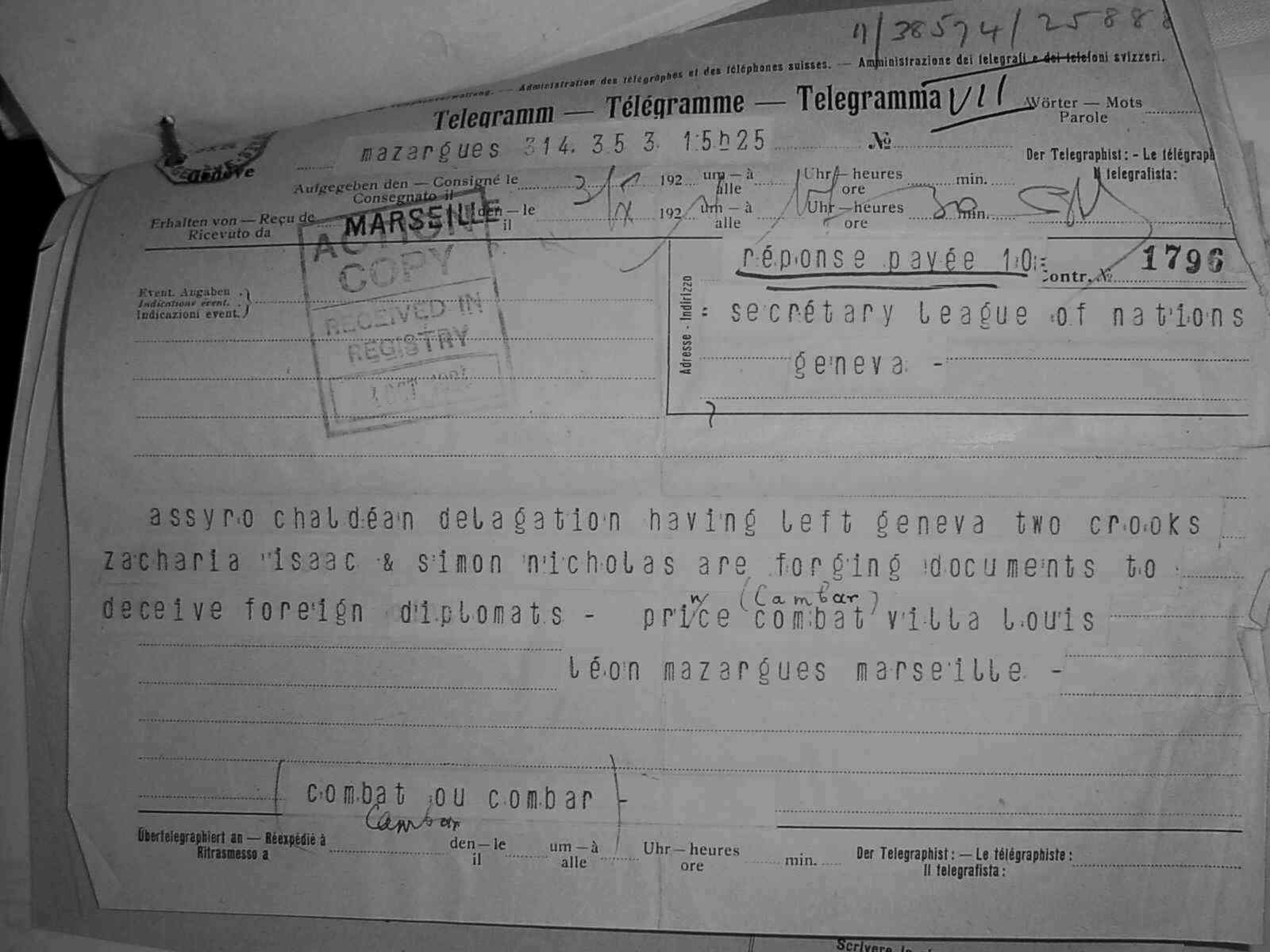
A telegram found
in the achieves of United Nations form 1924 in which they warn on the lies
and fallacies of the apostate Arameans who call themselves “Assyrians”.
The telegram reads:
Assyro Chaldean delegation having left Geneva
two crooks Zacharia Isaac & simon Nicholos are forging documents to
deceive foreign diplomats- prince Cambar villa Louis
Leon Mazargues Marseille
Lying, cheating, manipulating and falsification has always been the
trademark of the apostate Arameans who call themselves “Assyrians”.
Clergy
as well as laity make themselves guilty of this unholy behavior.
From
a
spiritual
perspective,
there
is
something
else
worth
noting
about
the
extreme
demonic
war
waged
by
all
the
apostateArameans—who
call
themselves
"Assyrians"—against
everything
that
isAramaic
or
Aramean.
We
are
firmly
convinced
that
this
unprecedented,
fierce
hatred
and
rejection
of
their
Aramean
origins
cannot
be
understood
through
secular,
relative, (materialistic)
analysis,
logic,
and
reason.
We
can
only
understand
this
appalling
blind
hatred
and
rejection
if
we
assume
that
this
involves
a
very
severe
form
of
demonic
activity
to
which
all
the
apostate
Arameans
who
call
themselves “Assyrians”
have
blindly
opened
themselves
up.
This
then
comes
very
close
to
the
warning
in
2
Thessalonians
2:10–11,
where
we
read:
10 and
all the ways that wickedness deceives those who are perishing. They
perish because they refused to love the
truth and so be saved.
11 For
this reason God sends them a powerful delusion
so that they will believe the lie12 and so that all will be condemned who have not
believed the truth but have delighted in wickedness
Within the Kurdish PKK movement, Mr. Aslan holds an important position,
probably just as important as Numan Ogur/Ugur/Shabo (here
and
here).
We don't know if Mr. Aslan played a role, alongside Numan Ogur/Ugur/Shabo,
in the monstrous alliance (here
and
here) between the PKK and the renegade Arameans who call themselves
"Assyrians" in 1993. We strongly suspect so. We are going to try to explain
it below to our beloved reader.
Ferman/Circis Aslan was one of the founders of the PKK
parliament in exile (see below), founded in 1995 in Amsterdam, Netherlands (see below). Since then,
Mr. Aslan has been a member of the PKK parliament several times. He doesn’t
hide his love for the PKK.
Presumably, Ferman Aslan introduced his wife's brothers (Ibrahim Tunc
(Abrohom/Arohom beth Arsan, Abrohom Tunc, Abrohom Gamri enz..), Metin Tunc
(Matay, Matay Arboyo, Ashuroyo, Matay Ashuroyo, Matay beth Arsan, Matay
Arsan enz..)) and sister Attiya Tunc (Attiya beth Arsan, Attiya Gamri enz..)
to a passionate 'Assyrianism' and 'love' for the PKK/Kurds.
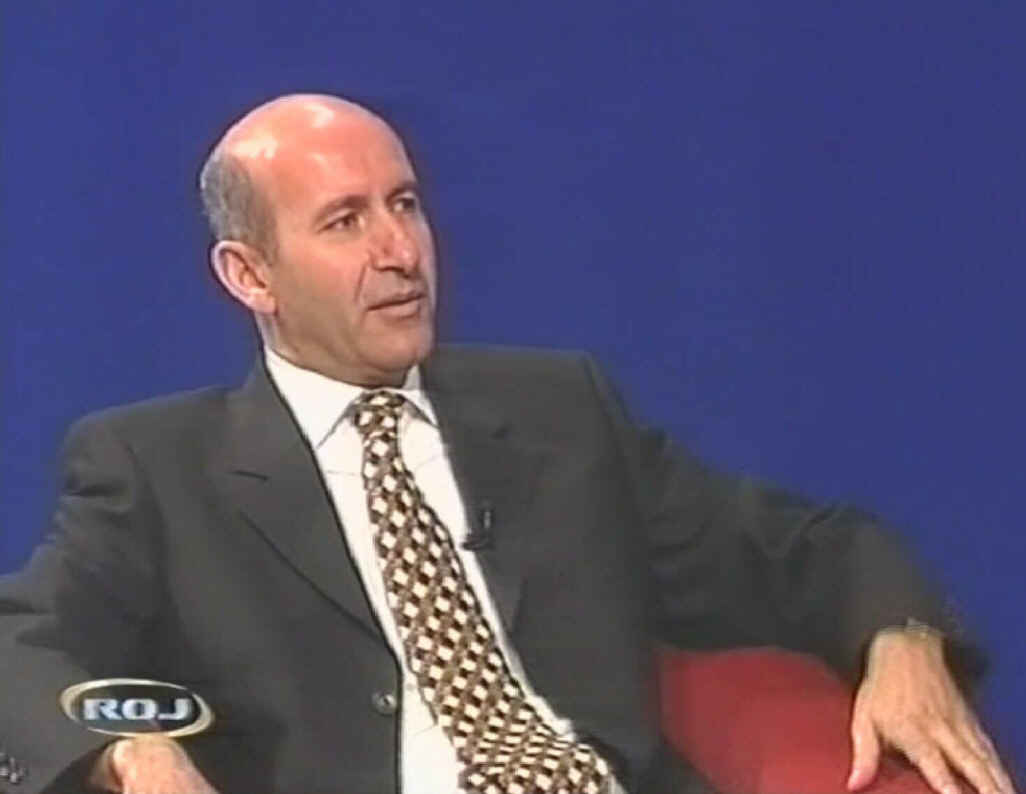
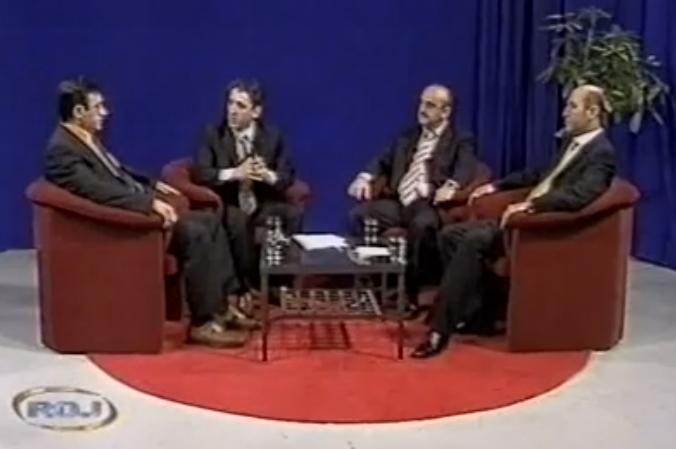
From left to right: Numan Ugur/ Ogur/ Shabo, Yahkub Rohyo, Ozcan
Kaldoyo and Ferman/ Circis Aslan (alias: George Aryo)
On
May
14,
2005,
the
PKK-affiliated
channel
Roj
TV
aired
an
episode
of
the
program
hosted
by
Ozcan
Kaldayo
and
Yahkub
Rohyo,
titled “Qolo
Hiro.”
The guests on the program were two very prominent “Christian”
figures within the PKK, namely Numan Ugur/Ogur/Shabo and
Ferman/Circis Aslan. The topic of discussion was a meeting between
GHB/MUB/Suroyo TV and Turkey.
Ferman/Circis
Aslan
recounts
his
2004
trip
to
the
PKK’s
headquarters
in
Iraq,
located
in
the
Kandil
Mountains
near
the
border
with
Iran. (audio
clip)
Ferman/
Circis Aslan:Last
year (2004),
when
I
went
to
the
countryside,
Yahkub
Rohyo:Did
you
go
toIraq?
Ferman/
Circis Aslan:Yes,
to
Iraq,
when
we
went
to
themountains
Yahkub
Rohyo:You
can't
go
to
Turkey
either,
right?
Ferman/
Circis Aslan:I'll
come
back
to
that.
Do
you
know
what
one
of
the
PKK
board
members
said?
He
said: “We
didn't
know
that
they (SuroyoTV/GHB/MUB)
had
met
with
the
country (Turkey).
The
phrase “when
we
went
to
the
mountains”
refers
here
to
the
Kandil
Mountains,
the
PKK’s
stronghold
in
northern
Iraq,
on
the
border
with
Iran.
A
few
comments
on
this:
1)
As
a
key
figure
in
the
PKK,
we
can
assume
that
Mr.
Aslan
traveled
to
the
Kandil
Mountains
on
several
occasions
to
receive
orders from
PKK.
2)
What
was
the
purpose
of
his
visit
to
the
Kandil
Mountains?
To
have
a
picnic
with
the
PKK
and
catch
up?
3) Or was the purpose of Mr. Aslan’s trip to assess the progress of
the monstrous alliance with the PKK, formed in 1993? What is the status
of the agreements reached? What can we improve? What is the current state of
the Aramean people’s resistance? What is the status of the “Assyrianization”
of the Aramean people? Which strategies of this collaboration need to be
adjusted?
4)
As
mentioned,
we
do
not
know
whether
Fermano/Circiso
Aslan (George Aryo)
was
directly
involved
on
the
ground
in
the
formation
of
the
monstrous
alliance
with
the
PKK
in
1993,
together
with
Numan
Ugur/Ogur/Shabo.
On the other hand, given his high-ranking position within the PKK, we cannot
imagine that the monstrous alliance with the PKK was formed without his
approval, support, guidance, or knowledge.
In
2005,
Mr.
Aslan
complained
that
he
had
not
been
able
to
travel
to
Turkey
for
21
years
due
to political
reasons (audio
quote).
He
says:
Ferman/ Circis Aslan:You
know
what?
I’ll
tell
you
that
I
haven’t
been
able
to
go
to
Turkey
for
21
years.
But
is
it
that
I
don’t
want
to
go (to
Turkey)?
I’d
really
love
to.
But
I
can’t
go.
I
don’t
have
the
means—I
do
have
the
means
to
make
the
trip,
though.
But
there’s
something
preventing
me
from
going
there,
and
that’spolitics.
Political
reasons?
What
kind
of
political
reasons,
Farmano/Circiso
Aslan?
Could
it
be
because
you
were
so
deeply
involved
with
the
PKK?
One
thing
we
know
for
sure,
Mr.
Aslan,
and
that
is
this:
Turkey
has
declared
you
a
persona
non
grata
for
a
reason—read
that
again:
for
a
reason!
Not
only
have
you,
together
with
your
friends,
committed
severe
cultural
and
spiritual
genocide (here
and
here)
against
the
Arameannation—with
the
help
of
PKK—through
your
frenzied “Assyrianization”
activities,
but
your
support
for
the
PKK
has
also
infuriated
Turkey.
Perhaps the Turks read newspapers and know that in 1995 you were the founder
of the PKK Parliament in exile (see below).
How strange, Mr. Aslan, that the Turks are so “unfair and undemocratic” that
they violate your rights. It’s quite something, isn't it?
"Many countries did not even know that Assyrians still exist! We have
visited Russia, Europe, the Middle East, the Caucasian countries, and South
Africa. And wherever this parliament was the Assyrian question was
discussed also! This is a great accomplishment for our people. When there is
no voice for our people, especially from the homeland, then this work will
not be permanent . From every corner and region our voices must heard-
loudly."
That
so
much
misery
has
been
caused
as
a
result
of
the
monstrous
alliance
with
the
PKK,
that
the
lives
of
so
many
young
men
and
women
have
been
destroyed
in
the
Kandil
Mountains,
that
unprecedented
hatred
and
division
have
been
sown
among
the
Arameannation,
that
families
have
been
torn
apart,
and
that
young
people
have
been
pitted
against
their
parents—well,
it’s
all
worth
it,
because
it’s
for
our
beloved
“Assyria,” isn’t that right, Fermano/Circiso Aslan?
He was recruited and brainwashed by the PKK/GHB/ ADO/MUB
Assyrians terrorists. He went to the terrorist camps in Kandil mountains
(northern Iraq) to be trained as guerrilla against Turkey. Many Arameans who
call themselves “Assyrians” have been deceived by the Assyrian terrorist.
Their life has been utterly ruined!
What
did
he
agree
to
with
Turkey,
after
so
many
years,
in
order
to
be
allowed
to
enter
the
country?
The
PKK
and
Abdullah
Öcalan
have
rewarded
Mr.
Aslan
for
his “love”
for
the
PKK
and
appointed
him
as
a
member
of
the
Grand
National
Assembly
of
Turkey
in
2023
on
behalf
of
the
Kurdish
People’s
Democratic
Party (PDP).
The
question,
dear
reader,
is:
What
did
Fermano/Circiso
Aslan
agree
to
with
Turkey
in
order
to
be
allowed
to
enter
the
country—after
so
many
years
of
being
unwelcome—and
take
a
seat
in
parliament
on
behalf
of
the
Kurds?
What is the PKK’s goal in placing Mr. Aslan in the Turkish parliament? Is it
to make him look good in the eyes of the blind and hard-of-hearing
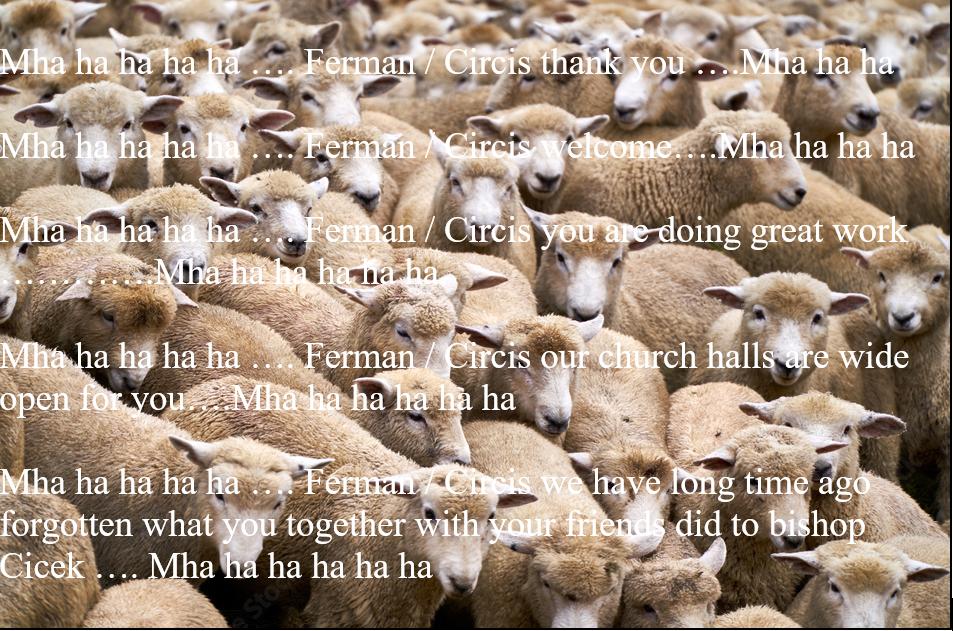
population so that they will welcome him as a hero into their church halls?
In
the
Tur
Abdin
region,
corruption
is
a
daily
occurrence
among
government
agencies.
Need
a
signature
from
the
city
hall?
You
have
to
pay
for
it.
Want
to
register
a
child?
You
have
to
pay.
You
have
to
pay
for
everything.
So
what
has
happened,
dear
reader,
since
Fermano/Circiso
Aslan
was
appointed
to
the
Turkish
parliament
in
2023?
It
seems
that
if
you
go
to
government
agencies
now
and
have
Fermano/Circiso
Aslan with
you,
you
no
longer
have
to
pay
any
money,
and
things
get
taken
care
of
quickly
for
you.
If
this
is
true,
then
it
will
make
Ferman/Circis
Aslan
look
good
in
the
eyes
of
the
people,
and
they
will
very
quickly
forget
everything
he
has
done
to
the
Aramean
people.
Four notable things regarding the interview:
1) Mr. Aslan doesn't say a word about
the monstrous pact between the PKK and the 'Assyrians' in 1993, as
detailed in the PKK newspaper Berxwedan.
2) Mr. Aslan doesn't say a word about the Kurds' role in the
1915
Aramean genocide.
3) Mr. Aslan compares the persecutions, violations, and
suffering/misery of the Arameans with those of the Kurds, they have a common
enemy.
4) If you look at the article and compare it with the
statements of PKK leader Abdullah Ocalan
in the newspaper Berxwedan from June 15, 1993, there seems to be a lot
of similarity.
National Dutch Newspaper “De Volksrant” of May 6, 1995
De Volkskrant, 6-5-1995
De Volkskrant, May 6, 1995
De
oprichting in Den Haag van een Koerdisch parlement heeft veel
opschudding veroorzaakt. In de media is volgens George Aryo de stem van de oprichters nauwelijks
gehoord
The establishment of a Kurdish parliament in The Hague has caused a
lot of commotion. According to George Aryo, the voice of the
founders has hardly been heard in the media.
Wij willen niet met de wapens
praten
We don't want to talk with weapons
Over de oprichting van het parlement van Koerdistan
is de afgelopen weken veel gezegd en geschreven. Er is een kamerdebat
aan gewijd en in Den Haag hebben duizenden Turken ertegen gedemonstreerd.
De betrekkingen tussen Turkije en Nederland zijn onder zware druk komen
te staan.
A lot has been said and written over the past few weeks about the
establishment of the Kurdistan parliament. A parliamentary debate
was dedicated to it, and in The Hague, thousands of Turks protested
against it. Relations between Turkey and the Netherlands have come
under heavy strain.
In de media kwam iedereen aan het woord:
parlementariërs, ministers, woordvoerders van Turkse organisaties en
deskundigen. Maar degenen om wie het eigenlijk ging, de oprichters en
leden van het parlement in ballingschap, werden te vaak vergeten.
Everyone got a say in the media: parliamentarians, ministers,
spokespeople from Turkish organizations, and experts. But the ones
it was actually about, the founders and members of the parliament in
exile, were too often forgotten.
Wie zijn deze parlementariërs?
Who are these parliamentarians?
Zijn het terroristen, .zoals sommigen beweren, of
zijn het democraten? Terwijl een aantal van hen in Nederland woont, is
deze parlementariërs niet naar hun mening gevraagd. Sommige politici
hebben hen bij voorbaat tot terroristen gebombardeerd.
Are they terrorists, as some claim, or are they democrats? While
some of them live in the Netherlands, these parliamentarians were
not asked for their opinion.
Some politicians have already labeled them as terrorists beforehand.
Ook ik ben lid van het parlement van Koerdistan. Ik
ben Koerd noch terrorist. Ruim tien jaar woon ik in Nederland en ik ben
nog nooit in aanraking geweest met justitie. Vreemd genoeg ben ik dus
ook geen Koerd, maar behoor ik tot het
Assyrische
(Aramese)
volk; christenen die
al eeuwen samen met de Koerden in hetzelfde gebied wonen.
I am also a member of the Kurdistan parliament. I am neither Kurdish
nor a terrorist. I have been living in the Netherlands for over ten
years and have never had any contact with the law. Strangely enough,
I am also not Kurdish, but belong to the
Assyrian
(Aramean)people; Christians who have lived for centuries
alongside the Kurds in the same area.
Velen zullen zich afvragen waarom de
Assyriërs
(Arameeërs) met
de Koerden een parlement hebben opgericht. Het is echter niet alleen een
parlement van en voor de Koerden, maar voor alle minderlieden in
zuidoost Turkije. Het heet dan ook niet Koerdisch parlement, maar
parlement van Koerdistan in ballingschap.
Many will wonder why the Assyrians
(Arameans)
set up a parliament with the
Kurds. However, it is not just a parliament by and for the Kurds,
but for all minorities in southeastern Turkey. It is therefore not
called the Kurdish parliament, but the Parliament of Kurdistan in
exile.
Om te weten waarom het parlement is opgericht, is
het van belang de recente geschiedenis te raadplegen. Ik beperk me tot
deze eeuw.
To know why the parliament was established, it's important to look
at recent history.
I'll limit myself to this century.
In de Eerste Wereldoorlog zijn een half miljoen
christelijke
Assyriërs
(Arameeërs) en 1,5 miljoen Armeniërs door of met toestemming
van het Turkse regime om het leven gebracht.
In World War I, half a million Christian Assyrian
(Aramean)
and 1.5 million
Armenians were killed by or with the permission of the Turkish
regime.
Miljoenen Koerden en
Assyriërs
(Arameeërs) zijn door de Turkse
leiders achtergesteld en vervolgd. Het motto was: laat ze dom blijven,
anders komen ze in opstand. Het gebied bleef verstoken van industrie,
wegen, elektriciteit en fatsoenlijk onderwijs.
Millions of Kurds and Assyrians
(Arameans)
have been marginalized and
persecuted by the Turkish leaders. The motto was: keep them dumb,
otherwise they'll rise up. The area was left without industry,
roads, electricity, and decent education.
Zowel de
Assyriërs
(Arameeërs) als de Koerden zijn door de
Turkse overheid nooit erkend als minderheden. De Koerden werden
berg-Turken genoemd, de Assyriërs Christen - Turken. De oprichter van de
republiek, Kemal Ataturk, heeft niet voor niets de leuze 'Turkije is van
de Turken' gelanceerd. Deze leuze prijkt nog dagelijks op de voorpagina
van het grootste landelijk dagblad.
Both the Assyrians
(Arameans)
and the Kurds have never been recognized as
minorities by the Turkish government. The Kurds were called mountain
Turks, the Assyrians
(Arameans)
Christian Turks. The founder of the republic,
Kemal Ataturk, didn’t launch the slogan 'Turkey belongs to the
Turks' for nothing. This slogan still appears daily on the front
page of the largest national newspaper.
In Turkije zijn democratisch gekozen Koerdische
parlementsleden gevangen gezet, anderen zijn gevlucht. Vanwege de
gedwongen assimilatie en de onderdrukking hebben miljoenen
Assyriërs
(Arameeërs) en
Koerden hun vaderland verlaten. Zij zijn het die het parlement in
ballingschap hebben opgericht. Via dit parlement willen zij de hele
wereld van de jegens hen gepleegde misdaden op de hoogte stellen en de
rechten van de volkeren uit Koerdistan behartigen. Zij willen hun
activiteiten in ballingschap voortzetten, met democratische middelen,
niet met kalashnikovs, niet met bommen.
In Turkey, democratically elected Kurdish parliamentarians have been
imprisoned, while others have fled. Due to forced assimilation and
oppression, millions of Assyrians
(Arameans)
and Kurds have left their
homeland. They are the ones who established the parliament in exile.
Through this parliament, they want to inform the whole world about
the crimes committed against them and defend the rights of the
peoples of Kurdistan. They want to continue their activities in
exile through democratic means, not with Kalashnikovs, not with
bombs.
Duizenden Turken demonstreerden onlangs in Den
Haag. Zij waren van mening dat Nederland geen, toestemming had mogen
geven voor· de oprichtingsvergadering van het parlement. Dat juist
Turken die in Europa leven zo fanatiek tegen het recht zijn van anderen
om een vergadering te beleggen, is vreemd. De
Assyriërs
(Arameeërs) en de Koerden
verwachten van de Turken in Europa meer tolerantie.
Thousands of Turks recently demonstrated in The Hague. They believed
that the Netherlands should not have allowed the founding meeting of
the parliament. It's strange that it is precisely the Turks living
in Europe who are so vehemently against others' right to hold a
meeting. The Assyrians
(Arameans)
and Kurds expect more tolerance from the
Turks in Europe.
In Nederland mogen de Turken bijvoorbeeld hun eigen
taal onderwijzen, hun eigen godsdienst belijden, hun eigen waarden en
normen behouden. Waarom krijgen wij van de Turken niet dezelfde rechten
in hun geliefde vaderland? Waarom mogen de Koerden niet eens een
televisieprogramma van vijf minuten hebben in hun eigen taal?
In the Netherlands, for example, Turks are allowed to teach their
own language, practice their own religion, and maintain their own
values and norms. Why don't we get the same rights from the Turks in
their beloved homeland? Why aren't the Kurds even allowed a
five-minute TV program in their own language?
Van mij en de 64 andere leden van het parlement in
ballingschap zult u niet horen dat Turken niet mogen demonstreren. Maar
demonstreren om een vergadering te verbieden, is net zo'n
tegenstrijdigheid als de leuze 'Turkije voor de Turken' in een land waar
miljoenen niet-Turken leven.
From me and the 64 other members of parliament in exile, you won't
hear that Turks are not allowed to demonstrate. But demonstrating to
ban a meeting is just as much a contradiction as the slogan 'Turkey
for the Turks' in a country where millions of non-Turks live.
In noord-Irak maakt het Turkse leger ook
slachtoffers onder de
Assyriërs
(Arameeërs). Deze onderdrukking door het Turkse
leger is een van de redenen waarom de
Assyriërs
(Arameeërs) met vier
vertegenwoordigers in het parlement in ballingschap deelnemen. Niettemin
leeft ook in de
Assyrische
(Aramese) gemeenschap de vraag waarom
Assyrische
(Aramese)
christenen deelnemen aan een instituut dat wordt gedomineerd door
islamitische Koerden. Vooral omdat beide volkeren met elkaar een zware
geschiedenis achter de rug hebben.
In northern Iraq, the Turkish army is also
causing casualties among the Assyrians
(Arameans). This oppression by
the Turkish army is one of the reasons why
the Assyrians
(Arameans)
participate in the parliament in exile with four
representatives. Nevertheless, within the Assyrian
(Aramean)
community,
there is also the question of why Assyrian
(Aramean)
Christians take part in
an institution dominated by Islamic Kurds, especially since both
peoples have a difficult history with each other.
Maar de klassieke uitspraak 'vrede sluit je met je
vijanden, niet met je vrienden' kan ook hier worden toegepast. De
Assyriërs en de Koerden dienen vandaag de handen in een te slaan. Beide
volkeren zijn op elkaar aangewezen, zoals de Israëli’s en de Palestijnen
dat zijn. Zij leven al eeuwen in hetzelfde gebied, dat de Koerden
Koerdistan noemen en de Assyriërs Assyrië.
But the classic saying 'you make peace with your enemies, not with
your friends' can also be applied here.
Today, the Assyrians
(Arameans)
and the Kurds need to join forces. Both
peoples depend on each other, just like the Israelis and the
Palestinians do. They have been living in the same area for
centuries, which the Kurds call Kurdistan and the Assyrians call
Assyria.
De Koerden streven niet direct naar afscheiding van
Turkije, maar naar democratie en vrijheid in een land waarin voor alle
volkeren een plaats is. De
Assyriërs
(Arameeërs) willen ook erkenning van hun
nationale rechten in een democratisch land. Zij hopen door het parlement
van Koerdistan in ballingschap op termijn een stem te krijgen op het
internationale politieke toneel.
The Kurds are not directly aiming for separation from Turkey, but
for democracy and freedom in a country where there is a place for
all peoples. The Assyrians
(Arameans)
also want recognition of their national
rights in a democratic country. They hope that through the Kurdistan
parliament in exile they will eventually get a voice on the
international political stage.
George Aryo Is lid van het par1ement van
Koerdistan in ballingschap; hij vertegenwoordigt hierin de Assyriërs.
George Aryo is a member of the Kurdish Parliament in exile; he
represents the Assyrians there.