|
Israel Audo
Who made the East- Aramean Nestorians known as "Assyrians"?
SUA/WCA and allowing terrorism
Aramean history, history, culture and language, a six partite interview
"Assyrian" terrorism and division within the Aramean nation
23-4-2018: "Assyrian" terrorism: The Western Anti-Aramean colonial product “Assyrians” and unconditional loyalty to PKK/YPG and Abdullah Ocalan
23-3-2015: "Assyrian" veneration of Samiramis, the whore of Babylon
21-2-2014: The origin of “Assyrian” fanaticism, their blindness, veneration of occult powers
19-12-2008: Pseudo-Assyrians, Pseudo-Chaldaeans, and the Cultural – National Needs of the Aramaean Nation
18-12-2008: Syriacs, "Assyrians" and "Chaldaeans" are all Aramaeans
26-9-2008: Terrorist ‘Kurds’ – Pawns of Merovingian Freemasonry Determined to Eliminate the Aramaeans
25-9-2008: Political Hypocrisy and Historical Forgery by Pseudo-Assyrians and Kurdish Terrorists
25-9-2008: Unprecedented Forgery of Ancient Mesopotamian History Expected to Trigger Chaos
23-9-2008: Pseudo-‘Assyrians’ and ‘Kurdish’ Terrorists: Liars Fostering Chaos and Genocide
22-9-2008: Anti-Christian Unholy Alliance: the Forged "Assyrian" Pseudo-Nation and the PKK Terrorists
21-9-2008: Looming End of Oriental Christianity: Unholy Alliance of ‘Kurdish’ Terrorists with Pseudo-Assyrians
19-9-2008: The Ongoing Aramaean Genocide, the Fabricated Pseudo-Assyrian Nation, and "Kurdish" (PKK) Terrorists
17-9-2008: Persecuted Aramaeans, a Pseudo-Nation of 'Assyrians,' Kurdish Terrorists, and the Anti-Chris
16-9-2008: The primitive, superseded, yet very dangerous ADO ideology unmasked: Jesus Christ the Assyrian?
17-7-2008: "Assyrian" terrorism: The bitter fruits of the spiritual colonial intervention: A monstrous covenant between the PKK and the organization of the apostate Arameans who identify themselves as “Assyrians”, namely: The Assyrian Democratic Organisation
8-10-2005: A disastrous decision of SUA- where are standards and values?
|
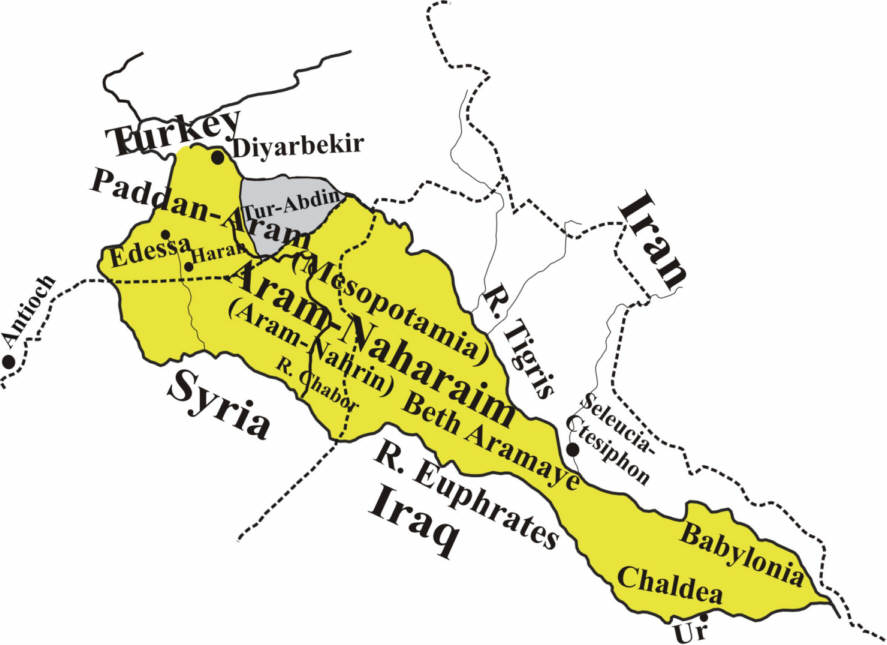
Aramean people: Aramean people (not to be confused with ‘Armenians’) speak Aramaic, the language spoken by Abraham, Moses and Jesus. They are the indigenous people of what was called in ancient times Aram- Nahrin, in our days it is called ‘Mesopotamia’. Some Arameans today identify themselves with “Assyrians”, because of the spiritual colonial hate generating activities of the Western missionaries and diplomats in the Middle-East in 16th and 19th centuries. Other Arameans became known as “Chaldeans”. However all of them are Arameans.In Turkey, the Arameans are called: Süryani. In Arabic they are called Al- Suryan.
Syriacs, "Assyrians" and "Chaldaeans" are all Aramaeans
6-11-2008
By Prof. Dr. Muhammad Shamsaddin Megalommatis, Orientalist
Source: http://www.buzzle.com/articles/syriacs-assyrians-and-chaldaeans-are-all-aramaeans.html http://www.americanchronicle.com/articles/80293
Syrians, Syriacs, ‘Assyrians’, ‘Chaldaeans’ or Aramaeans?
What is the correct national name of the Modern Aramaeans? Why are there Aramaeans, who despite the fact that they speak Aramaic, insist on calling themselves 'Assyrians'? Why other Aramaeans stick to a third name, 'Chaldaeans'? Is it proper to use the name 'Syriac' that usually describes a late form of Aramaic language and scripture (from which Arabic derived) as national name of the Aramaeans? What is the difference between the Syriacs and the Syrians? And what is the relationship of the Syriacs and the Syrians with the modern 'Assyrians' and the Ancient Assyrians? Are the terms Assyria and Syria identical?
Before tackling key issues of the Middle Eastern puzzle, one is constrained to address all these questions. It will take a series of articles to define terms and make clarifications that are necessary to anyone concerned with, involved or just living in the Middle East. We will specify how some terms were kept alive throughout millennia, and how other terms have been recently revitalized by colonial academia seeking political impact. Before all this, it is necessary to remind everyone that it has been very common throughout History for a people, for a 'nation', to be known to most of the surrounding peoples and countries, or in modern times to the rest of the world, through a name attributed to the people / nation in question by another people. This event does not minimize in any dimension the radiation of that people's culture and civilization. It matters not! At least, it looks like that…..
We all know Finland; few heard that in Finnish Finland is called Suomi! We all say 'Greece'; few are aware that in Greek Greece is called Hellas or Hellada (d to be pronounced as th- in 'there')!
We all name the country of the Nile Delta 'Egypt'; but very few are familiar with the fact that the Egyptians call their own country 'Masr'! And whereas many have learned that the word 'Egypt' originates from the Ancient Greek term 'Aigyptos', only specialists have knowledge of the Ancient Egyptian etymology of the Ancient Greek name (from the term Ha Ka Ptah, which means 'the Abode of the 'Soul' of Ptah', an Ancient Egyptian God localized at Memphis). Not a single Modern Egyptian has a clue about the Assyrian – Babylonian origin of the Arabic name 'Masr' of Egypt; yet for thousands of years the terms Musur and Mat Masri were the usual 'international' appellations of Egypt (since Assyrian – Babylonian was the international language from around 2000 down to 400 BCE)! At those days, the Ancient Egyptians called their country 'Kemet', the 'black one', because of the Nile mud colour which is due to the geological specificities of the Abyssinian silt that is transported by the Blue Nile and the Nile's affluent Atbarah all the way down to the Mediterranean!
Basic Dictionary of Aramaean related appellations
Aramaeans: The real name of the people whose History spans over 3200 years. They were first mentioned in the Annals of the Assyrian Emperor Tiglath-pileser I. As Semitic people, the Aramaeans are closer to the Hebrews and the Phoenicians (North-Western Semitic languages) than to the Assyrians and the Babylonians (Eastern Semitic languages).
Assyrians: Along with the Babylonians, they are the descendants of the Accadians, the earliest Semites who settled around Agade (Accad) and prevailed over the Sumerians, forming a large empire under Sarrukin (Sargon I) and Naram Sin around the middle of the 3rd millennium BCE. Contrarily to the Babylonians, the Assyrians had a policy of national - ethnic purity, and did not intermingle with the Aramaeans, whom they pushed away to the West (today's Western Syria) and to the Mesopotamian South (Babylonia). At the moments of its greatest power, under the Sargonids (722 – 609), Assyria controlled almost all the then known world, but the Assyrians were a tiny and ethnically pure minority within their Empire. With the collapse of Assyria (614 – 612 – 609 BCE), Assyrian ceased to be written and spoken, and no Assyrians were found anywhere in the Middle East. According to a new interpretation that gets momentum, they constituted part of the migrations from the Caucasus area to Europe (Cimmerians).
Assyria: The land belonged, as the people and the capital city did, to the Supreme God Assur, usually viewed as the Only God within monotheistic context. Assyria corresponds geographically to modern Northern Iraq, Eastern Syria, and parts of SE Turkey: this was the Assyrian nucleus, the area that was populated by Assyrians from 2150 to 620-610 BCE. When Assyria subdued the Neo-Hittites, the Urartus, the Phoenicians, the Babylonians, the Medes and other peoples in Iran, the Elamites, the Israelites and the Egyptians, Assyria – center was a small, central, part of the Assyrian Empire.
Chaldaeans: Named 'Kaldu' in Assyrian – Babylonian texts, they are one of the Aramaean peoples. They intermingled extensively with the Babylonians, who finally - in later times - got assimilated with them, and were even called 'Chaldaeans' – mistakenly.
Syriacs: The modern scholarly term is formed in order to provide the corresponding term of the Ancient Greek name 'Syros' and in sheer distinction from the Syrians. Within Ancient Greek literary context, 'Syros' is the inhabitant of 'Syria', and this was the usual way for the Greeks to call the Aramaeans.
Contrarily, Syrians are the inhabitants of the modern state of Syria, who speak Arabic in their majority, because of the linguistic arabization that followed the gradual process of islamization.
Syria: The geographic term in Ancient Greek exists as shortening ('apokope') of the term 'Assyria'. It exists in Ancient Greek only after Assyria ceased to exist (609 BCE). It does not correspond to the term 'Assyria' in any sense. 'Syria' relates to the former Assyrian Imperial lands in the West of Mesopotamia up to the Phoenician Mediterranean coast. After being a mere geographical term that did not relate to the Mesopotamian Center – land Assyria, Syria became the Greek name of the Hellenistic kingdom that had its capital at Antioch (Antakya in Turkey). Syria as geographical term gave birth to the term 'Syros' for the native inhabitants of 'Syria' that happened to be the Aramaeans.
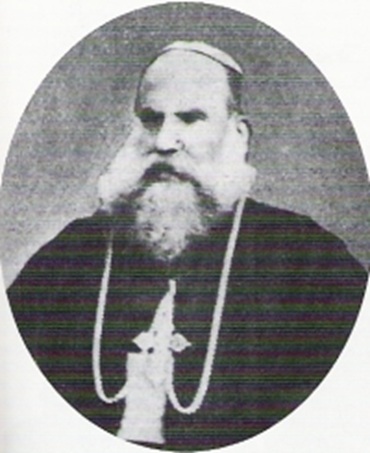
Patriarch Emmanuel Delly of the Chaldean Church of Babylon in Iraq affirms the Aramean origin of the Iraqi Christians http://www.iraqichristians.org/English/Patriarch_Emmanuel_Delly_Aramean_28_10_2008.htm
Copyright © Aram-Naharaim Organisation
|
Letters to governments and international institutions
Colonialism: Downfall and Diaspora of Aramean nation
Aramean Spiritual/ Physical Genocide
Fake News on the Aramean nation:
20-1-2015: The deep rooted demonic hatred against the Aramean indigenous nation
6-9-2014: Why are “Assyrians” very important to the illuminati satanists
17-4-2009: Turkey´s Ongoing Colonization, the Aramaeans, the Kurds, the Armenians, Pan-Arabism and Islamism
23-3-2009: Western European Colonial Odium and Evildoing Against the Aramaeans and the Oriental Christianity
11-4-2008: Through all the misery: Miracles happens in Iraq
13-2-2008: The Aramean sociologist Fuad Deniz was not killed by the Turks, but slaughtered by his cousin
5-1-2008: Is Sweden creating conditions for a new Aramean genocide? Spiritual crusades of Professor David Gaunt against the Aramean nation
28-9-2007: Plead for the Unification of Aramaeans - Letter to US and French Presidents, UK Premier
2-7-2007: The Aramaeans have been victims of hate generating acts,
16-12-2006: Following the American “Christians”, now the Dutch Christians: Spiritual Crusades against the Aramean nation
29-6-2006: The Anglican Church and the recognition of the Aramean Spiritual Genocide
2-9-2005: IRAQ's Modern History The Arab Majority and The Minorities
10-8-2005: The Aramaeans' rise will transfigure the Middle Eastern Chessboard
13-5-2005: Is there an Assyrian cause in Iraqi Kurdistan?
29-6-2004: Progenitor of Wars and Tyrannies: the Falsehood of Pan-Arabism
|